1.5 Continuity of Government and Parliament

What happens to the existing Scottish Parliament and Government?
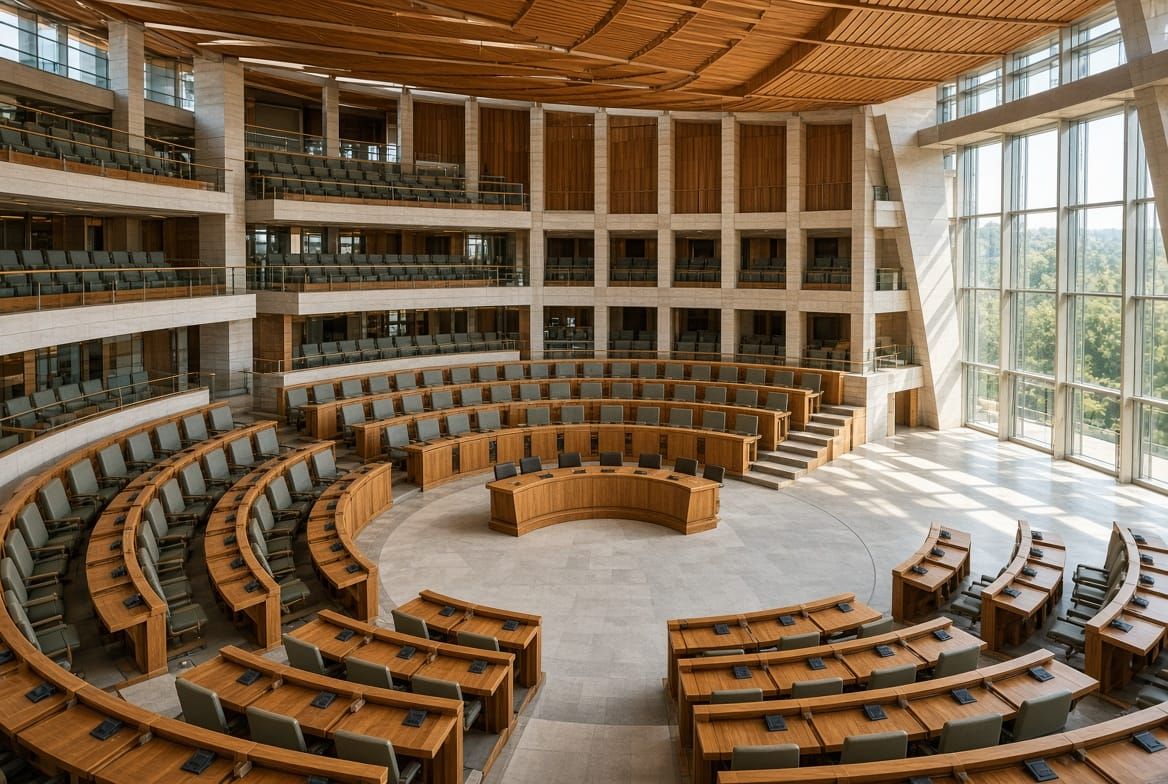
The core question is institutional and practical: what happens to the existing Scottish Parliament and Scottish Government on the path to independence? The short answer is continuity without interruption. On Independence Day, the Scottish Parliament and the Scottish Government would become the parliament and government of the independent state. Reserved functions currently exercised by the UK Government would transfer by agreement on Independence Day or according to a staged timetable. Existing civil service capacity in Scotland would form the core of the new state’s administration, supplemented as needed by transferring relevant UK staff, recruiting specialists, and using transitional contracts.
This is one of Scotland's strongest continuity advantages. Unlike many new states that have had to build legislative and executive institutions after independence, Scotland already has a functioning, democratically elected parliament and a government experienced in running major public services. The transition is therefore one of expanding responsibility, not invention. There would be no dissolution, no vacuum of authority, and no requirement to create these core institutions from scratch.
The question matters because every other continuity claim in this framework—pensions, benefits, tax collection, financial regulation, borders, sterlingisation arrangements, and the nuclear basing agreement—depends on a legitimate government and legislature in place to hold legal authority and direct the administration. A gap in political authority would turn operational risks into a constitutional crisis. The main design choice is to carry forward existing elected institutions and expand their competence under the independence settlement and the interim constitution. The main constraints are capacity, especially for currently reserved functions, and the need for UK agreement or transitional service arrangements where delivery still depends on UK systems during the handover. The 18–24 month working timeline set out elsewhere in this framework provides the window within which that expansion of competence and capacity must be prepared. Precision about the unbroken chain of democratic authority is therefore the institutional foundation for the continuity-first design that runs through the entire series.
Current Position and Legal/Institutional Baseline
The Scottish Parliament and Scottish Government exist under the Scotland Act 1998 and related legislation. They are already the democratic centre of devolved government in Scotland. The people of Scotland elect the Parliament under a proportional system; the Government is formed from and accountable to that Parliament. Both institutions exercise substantial legislative and executive competence over health, education, justice, most aspects of transport, the environment, local government and a significant range of taxation and social security powers. Their legal foundation is domestic statute. Their political foundation is repeated democratic election.
Independence does not require abolishing or re-founding these institutions. It requires that their competence expand to cover the full range of a sovereign state’s responsibilities, subject to the interim constitution and to any transitional limitations agreed in the independence settlement. The Scotland Act itself anticipates the possibility of modification of competence through Section 30 Orders and primary legislation. The 2022 UK Supreme Court judgment confirmed the limits of unilateral action on the reserved matter of the Union. Still, it did not alter the continuing existence or democratic legitimacy of the Parliament and Government within the competence they already hold. Once a lawful Yes vote has been secured under a Section 30 Order or equivalent and the independence settlement has been agreed, the legal mechanism for expansion of competence is the settlement itself and the legislation that gives it effect in both jurisdictions.
The practical baseline is a functioning administration already based in Scotland. Directorates, agencies and public bodies employ substantial numbers of civil servants who deliver major public services. The civil service in Scotland operates under the constitutional conventions and statutory frameworks that apply to the UK civil service as a whole, while being accountable day-to-day to Scottish Ministers. UK departments continue to exercise reserved functions—defence, most aspects of foreign affairs, macroeconomic policy, immigration, national security, and the remaining elements of social security and taxation. Many of those functions have dedicated Scottish footprints or intergovernmental arrangements. The Continuous At-Sea Deterrent infrastructure, reinforced by the July 2026 Project Royal Oak investment, is an example of a reserved function with deep operational presence in Scotland. Payment systems for State Pensions and certain benefits remain UK-wide. The baseline is therefore substantial existing capacity in devolved areas, combined with dependence on UK systems and authority for reserved areas. Continuity of elected institutions provides the democratic and administrative platform for transferring reserved functions.
Mechanism and Delivery
The mechanism is legal and political, not an administrative invention. On Independence Day, by virtue of the independence settlement and the legislation that gives it effect, the existing Scottish Parliament becomes the legislature of the independent state and the existing Scottish Government becomes its executive. Members of the Scottish Parliament continue in office. The First Minister and ministers continue in post. Procedures, committees, standing orders and the body of devolved law already made by the Parliament remain in force unless and until changed under the new constitutional arrangements. Continuity applies to institutions, personnel, and legal acts.
No immediate general election would be required. The existing parliamentary term would continue to its natural end unless the Parliament itself decided otherwise under the interim constitution. This avoids unnecessary political disruption at the moment when administrative continuity is paramount. The first elections to the independent Scottish Parliament would take place at the end of the existing term or on a date set by Parliament under the new constitutional rules. The referendum provides the mandate for independence itself. Once that mandate exists and independence is implemented, the existing Parliament is the legitimate legislature until the people next elect its successor under the ordinary timetable.
Reserved functions would transfer according to the independence agreement. Some would transfer on Independence Day; others would move on a staged timetable supported by transitional service agreements so that delivery does not fail. The negotiation principles and red lines set out earlier in this framework define the essentials that must be secured—sterlingisation arrangements, the long-term nuclear basing agreement, no hard border for people, fair division of assets and liabilities, and uninterrupted continuity of pensions and public services. The staging of residual transfers is a matter of practical design within the 18–24 month working timeline, with contingency to 30–36 months if complexity requires it. Legal authority for the expanded functions would flow from the independence settlement and the interim constitution. Operational delivery would be supported by dual-running of systems where necessary, early build of Scottish capacity, and contractual transitional arrangements with UK bodies.
Civil service continuity would be achieved by protecting the terms and conditions, including pension rights, of existing Scottish Government civil servants, who would form the backbone of the independent state’s administration. Additional capacity for currently reserved functions would be met through a combination of transfer of relevant UK civil servants who work on Scottish matters or who choose to move to the new Scottish service, recruitment of specialists in tax administration, diplomacy, financial regulation, border management and related fields, and transitional contracts with UK departments to continue delivering certain services for an agreed period while Scottish capacity is built. The guiding principle is that essential public services and financial functions must continue to operate from day one. Staffing and organisational gaps would be managed through planning and temporary arrangements rather than allowed to create disruption. Day-one essentials—tax authority capacity, initial central bank or monetary authority functions under the sterlingisation model, payment continuity for pensions and benefits, basic diplomatic capacity, and core financial regulation—would be prioritised in civil service and organisational planning.
The interim constitution, addressed in the following section of this framework, would set the immediate rules under which the continuing Parliament and Government operate as the institutions of the independent state. The permanent constitution, prepared later by a Constitutional Convention and put to a referendum, would settle the long-term design. Continuity of the institutions elected by the people is compatible with both stages. It bridges the devolved present and the sovereign future.
Continuity Design
Continuity of government and Parliament is the institutional counterpart of continuity of law, pensions, currency and public services. The default is that existing rights, payments, contracts, services and legal status continue unless and until changed under lawful authority. There is never a moment at which no legitimate authority exists. The same elected institutions that have governed devolved matters continue, simply with expanded competence. This provides democratic legitimacy, administrative experience and public recognition at the precise moment when both are most needed.
Protection of civil service terms and conditions, including accrued pension rights, forms part of the wider continuity of employment and accrued rights that runs through this framework. Transitional service agreements and dual-running of systems protect the delivery of pensions, benefits, tax functions and other services that currently depend on UK infrastructure. The staged transfer of reserved functions ensures that legal authority and operational capacity move together rather than leaving a gap. Independence Day is a legal and political event; it is not the end of institution-building. Many bodies will continue to mature after that date. The test is that the essentials of sovereignty, payment continuity, public order and financial stability are in place under the direction of a legitimate legislature and executive.
Alternatives that create a gap—dissolving the Parliament pending new elections, or inserting a provisional authority without a clear electoral base—would invent a problem Scotland does not have. The framework rejects them. Authority flows from the referendum mandate, through the independence settlement, into the existing Parliament and Government, and onward under the interim constitution until the first post-independence elections under the new rules. Political continuity without operational continuity would be an empty achievement. The framework treats both as mandatory.
Constraints and Trade-offs
Legal constraints
The Scotland Act 1998 and the 2022 Supreme Court judgment set the current limits of competence. Expansion of competence to the full range of sovereign functions requires the independence settlement and the legislation that gives it effect. Scotland has no unilateral power to seize reserved functions. Transitional service agreements and the transfer of staff or systems depend on UK cooperation or on negotiated terms. The interim constitution must itself be given legal effect. The legal constraint is therefore the need for agreed instruments to expand competence and to authorise the transfer of functions. Continuity of the existing institutions is legally straightforward once the settlement is in place; the transfer of reserved authority is not automatic.
Fiscal constraints
Building tax, diplomatic, regulatory and border capacity in the 18–24 month window is a real fiscal cost. Salaries, systems, estates, transitional contracts and contingency provision must be funded inside the medium-term fiscal plan and the fiscal rules set out elsewhere in this framework. Existing Scottish Government headcount cannot absorb every reserved function without expansion. The cost is a one-off and ongoing cost of statehood. The published transition plan must make it visible, not bury it. The larger fiscal risk lies in a gap in authority or capacity that disrupts tax collection, pension payments, or financial stability and thereby damages the opening fiscal position. Continuity of the elected institutions reduces political risk; capacity expansion addresses operational risk. Both carry a price that the fiscal framework must absorb.
Operational constraints
Delivering expanded functions requires aligned systems, data, staff, and legal authority. Payment systems for pensions and benefits, tax collection platforms, financial regulatory capacity, initial monetary authority functions under sterlingisation, diplomatic representation and border management cannot be assumed to transfer seamlessly without preparation. Dual-running and transitional contracts mitigate the risk but still require time, planning and, in many cases, UK cooperation. The nuclear basing agreement involves detailed operational protocols that must preserve Continuous At-Sea Deterrent readiness under Scottish territorial sovereignty. The operational constraint is the time and resources required to build or transfer critical capacity without creating gaps on Independence Day. The design response is to prioritise day-one essentials and the published readiness milestones in the transition plan.
Political constraints
Political pressure for an immediate election or for a symbolic reset of institutions is foreseeable. Critics will argue that a Parliament elected under devolution lacks a full mandate for sovereign powers. The UK Government’s willingness to agree staged transfers and transitional service arrangements cannot be assumed, particularly in a post-2026 context where it has already refused requests for a Section 30 Order. On the Scottish side, expanding capacity for reserved functions will create internal competition for resources and attention. The political constraint is therefore the interaction between domestic expectations for democratic renewal and the practical requirement for stability, and the dependence on UK engagement for a smooth transfer of functions. The response is continuity of the existing term unless the Parliament itself decides otherwise, prioritisation of operational readiness, and transparent planning that makes both capacity needs and dependence visible.
Time constraints
The 18–24 month working timeline, with contingency to 30–36 months, is the binding time constraint. Civil service expansion, systems readiness, negotiation of transitional agreements and the legal work required for the interim constitution and the independence settlement must fit inside that window or justify its extension. Certain capacity-building tasks cannot be compressed indefinitely without transferring risk to the public. The time constraint interacts with every other constraint: legal instruments take time to negotiate and pass; fiscal provision must be planned; operational systems must be tested; political agreement must be secured. Competence takes priority over speed when the two conflict. A delayed but orderly expansion of competence is preferable to an on-time transfer that leaves essential functions under-resourced or legally incomplete.
Consistency with the Wider Framework
Continuity of Parliament and Government is the institutional counterpart of continuity of law, pensions, currency and public services. The legal route and the clear simple-majority mandate produce the authority for independence. The negotiation principles and red lines shape the settlement that must be delivered. The timeline sets the preparation window. This section ensures that, within that window and on Independence Day, a legitimate legislature and executive can hold power and direct the administration. Later sections on the interim and permanent constitution, the civil service, day-one institutions, sterlingisation, fiscal rules, nuclear basing, borders and the Wealth Fund all presuppose a continuing Parliament and Government. This section delivers that presupposition as a design rule rather than as an assumption.
These sections do not conflict with that. Sterlingisation requires a government capable of setting fiscal rules and overseeing the initial monetary authority. The nuclear basing agreement requires an executive able to conclude and implement a treaty-based arrangement while retaining territorial sovereignty. Continuity of pensions and benefits requires a government able to direct payment systems and to enter transitional agreements. Day-one institutions require a legislature and executive to create and oversee them. The non-EU orientation and the Common Travel Area-style movement framework require a government able to conduct the necessary external relations. Continuity of the existing elected institutions supplies the democratic and administrative platform on which all of those elements rest. The expansion of competence is managed within the published transition plan so that political continuity and operational continuity move together.
Hardest Critiques and Direct Responses
Feasibility
The hardest practical critique is that expanding competence and capacity for currently reserved functions within 18–24 months is unrealistically demanding, particularly if UK cooperation on transitional agreements and staff transfers is limited. The response is direct. Building tax, diplomatic and regulatory capacity on that timetable is demanding; it is not impossible. Other states have stood up core functions on similar or shorter timetables when prioritisation was clear. The framework prioritises day-one essentials and uses transitional contracts and dual-running to bridge gaps. Unilateral readiness is treated as necessary insurance rather than as an assumption of goodwill. Feasibility depends on early, sustained preparation, published milestones, and the willingness to extend the timeline when competence requires it. The alternative of dissolving existing institutions or inserting a provisional authority would add political disruption to operational difficulty and is rejected.
Cost and fiscal burden
Critics will argue that the cost of capacity expansion—salaries, systems, estates, transitional contracts—imposes an unacceptable burden on top of the opening fiscal position. The response is that the cost is real, must be funded within the medium-term fiscal plan and the fiscal rules, and is a necessary cost of statehood. Existing headcount cannot absorb every reserved function without expansion. The published transition plan makes the cost visible rather than burying it. The larger fiscal risk lies in a gap in authority or capacity that disrupts tax collection, pension payments, or financial stability. Continuity of the elected institutions reduces political risk; capacity expansion addresses operational risk. Both are required. Honesty about the fiscal implication is part of the framework’s credibility.
Dependence on agreement
Dependence on UK engagement for transitional service agreements, optional staff transfers and the smooth staging of reserved functions is real and is not denied. If cooperation is limited, Scotland would lean more heavily on recruitment and on accelerating its own systems. Continuity of pensions and benefits payment is a red line; if UK transitional support for those systems were withheld, Scottish-built or dual-run systems would have to carry the load. Early preparation mitigates that risk. The framework treats UK cooperation as valuable and probable in areas of mutual interest, including avoiding disruption to pension payments, and treats unilateral readiness as necessary insurance. Dependence is acknowledged; the design response is preparation, not assumption.
Transition risk
Transition risk arises less from the existence of the Parliament and Government than from the transfer of reserved functions and the capacity to discharge them. Payment systems, tax collection, border functions and financial regulation could break if legal authority, data, staff and systems are not aligned on Independence Day. Mitigation is the staged transfer timetable, transitional service agreements, dual-running where needed, prioritisation of day-one essentials, and the published readiness milestones in the transition plan. Political continuity without operational continuity would be an empty achievement. The framework treats both as mandatory. Continuity of elected institutions eliminates the risk of a vacuum of authority; capacity and systems work addresses residual operational risk.
Alternatives (status quo and previous proposals)
Immediate dissolution and fresh elections would maximise democratic “reset” symbolism and maximise administrative and political disruption at the moment when stability is most needed. That alternative is rejected in favour of continuity of the existing term unless the Parliament itself decides otherwise. A provisional or technocratic authority would lack the democratic legitimacy of the elected Parliament and Government and is unnecessary given that those institutions already exist; it is rejected. Building new legislative and executive institutions from scratch is the path forced on some newly independent states that lacked prior self-government. Scotland does not lack them. Using what already exists is both more democratic and more practical. The 2013 White Paper approach of building on existing institutions is retained and stated more explicitly as a continuity design requirement rather than only as a convenience. The status quo of continued devolution avoids expanding competence but leaves the underlying constitutional disagreement unresolved. The framework uses the institutions the people have already elected as the platform for sovereign responsibility.
Political and public credibility
Critics may argue that a Parliament elected under devolution lacks a mandate to exercise the full powers of an independent state, or that independence should trigger fresh elections as a matter of democratic principle. The precise answer is that the mandate for independence itself comes from the referendum, not from a Holyrood election. Once that mandate exists and independence is implemented, the existing Parliament is the legitimate legislature until the people next elect its successor under the ordinary timetable. Forcing an immediate election would prioritise a symbolic reset over operational stability. The framework prioritises stability. Parliament remains accountable; the electoral cycle continues; and the constitutional change does not require dissolving the only democratic institution already in place. Credibility with the public and with counterparties depends on an unbroken chain of democratic authority and on operational readiness. Continuity of existing institutions provides the first; capacity planning and transitional arrangements provide the second. A strategy that dissolves working institutions for symbolic reasons would forfeit both.
Position Summarised
The Scottish Parliament and Scottish Government continue without interruption and become the central institutions of the independent state. Reserved functions transfer by agreement on Independence Day or on a staged timetable supported by transitional service arrangements where necessary. Existing civil service capacity in Scotland forms the core of the new administration and is expanded as required through transfer of relevant UK staff, recruitment of specialists and transitional contracts. There is no vacuum of authority, no need for immediate elections solely because of independence, and no requirement to invent the basic institutions of democratic government. Continuity of the institutions the people of Scotland have already elected is both a practical necessity and a democratic strength. Capacity for currently reserved functions is a real constraint and would be managed by prioritising day-one essentials, transitional agreements, and funded expansion, not by denial. Political continuity and operational continuity are both required; without the second, the framework would fail its wider continuity test. The interim constitution and the independence settlement define the rules under which the continuing institutions exercise expanded power within the published transition timeline.
Conclusion
Scotland already possesses a democratically elected parliament and a government experienced in running major public services. Independence expands their responsibility; it does not require their replacement. On Independence Day, the existing Scottish Parliament and Scottish Government become the parliament and government of the independent state. Reserved functions transfer by agreement on a staged timetable supported, where necessary, by transitional service arrangements. Civil service capacity in Scotland forms the core of the new administration and is supplemented by transfer, recruitment and temporary contracts so that essential functions operate from day one. No vacuum of authority arises. Independence does not require an immediate election. The first post-independence elections occur at the end of the existing term or at a date set under the new constitutional arrangements. The interim constitution and the independence settlement define the rules under which the continuing institutions exercise expanded power. That is continuity of government and Parliament as a design requirement: use what the people have already elected, expand competence under law, and build capacity for reserved functions without interrupting the chain of democratic authority. This is one of the clearest practical advantages available to Scotland, and this framework uses it fully. Every subsequent section of this series—on the interim constitution, day-one institutions, sterlingisation, fiscal rules, nuclear basing, borders and pensions—presupposes a legitimate legislature and executive in place. This section ensures that presupposition is a deliberate design choice, not an unexamined assumption.
Series Footer
This analysis forms part of People’s Future Scotland: The Independence Debate, a series examining the practical, legal and institutional questions that would arise in any move to independence. Each section is designed to withstand scrutiny by setting out mechanisms, constraints and continuity requirements with equal clarity. The series proceeds from the premise that a decision of this magnitude requires a process and a prospectus that both supporters and opponents can recognise as serious.