11.6 Local Government and Islands
Islands and remote communities already have specific recognition and support mechanisms within Scottish policy; these would be retained and could be strengthened.

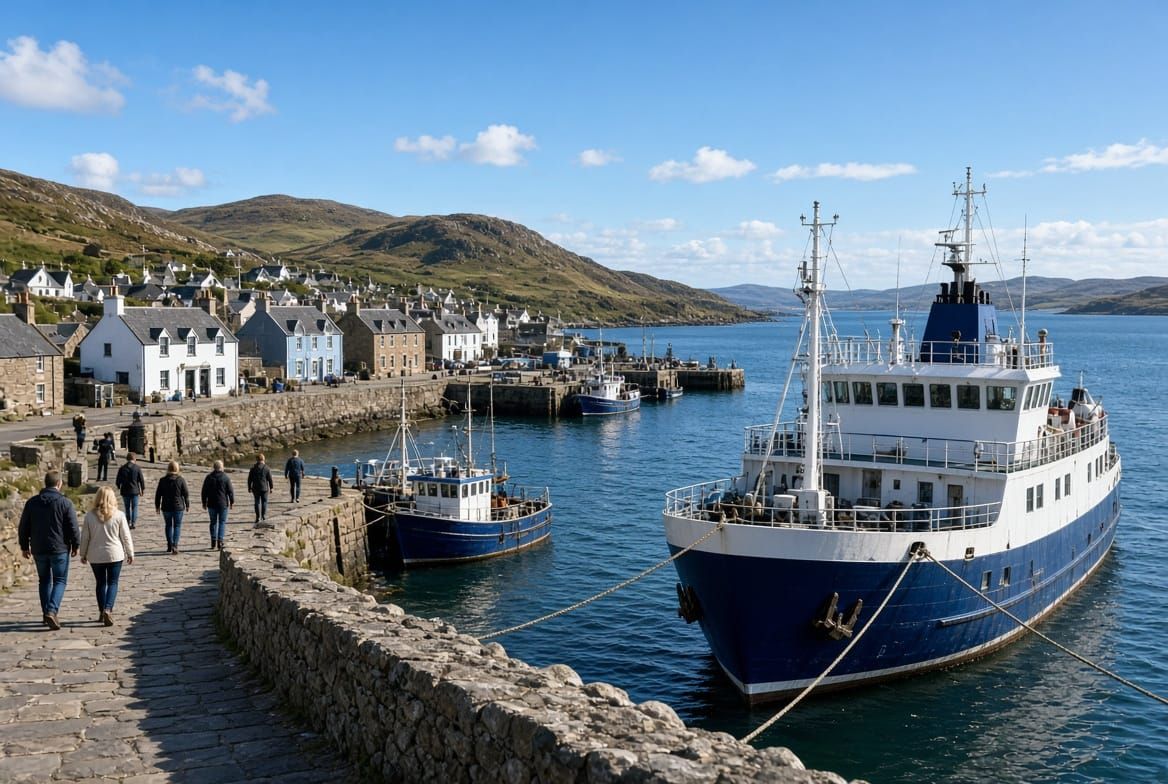
What would happen to local government and to island communities?
Local government would continue under the existing Scottish framework of councils and funding arrangements. Islands and remote communities already have specific recognition and support mechanisms within Scottish policy; these would be retained and could be strengthened. The distinct needs of island authorities — transport, housing, population and service delivery — would remain a priority for the Scottish Government and Parliament. No structural disruption to local democracy or service delivery is required.
Scottish legislation already establishes local government. Councils, their powers, their electoral arrangements and the main framework for local service delivery sit within the Scottish constitutional and legal order. Independence does not require redesigning local democracy. The councils that already deliver local services, set local priorities within their competences and represent their communities would continue to do so.
On Independence Day, there would be no forced reorganisation of local government, no suspension of council functions, and no break in the local services people use. The main design choice is unbroken continuity of the existing Scottish local government framework, full fiscal responsibility on the Scottish budget, and retention — with the option to strengthen — of specific recognition for island and remote needs. The main constraints are the full cost of local and island services under the fiscal rules, the higher unit costs of island delivery, and the need for clear transitional funding so councils can plan without disruption.
Local government in Scotland is already established under Scottish legislation. Councils, their powers, their electoral arrangements and the main framework for local service delivery sit within the Scottish constitutional and legal order. Independence does not require redesigning local democracy. The councils that already deliver local services, set local priorities within their competences and represent their communities would continue to do so. On Independence Day there would be no forced reorganisation of local government, no suspension of council functions and no break in the local services that people use. Islands and remote communities already receive specific recognition in Scottish policy; those mechanisms would be retained and could be strengthened, where Parliament and the Government choose.
This section sets out the position. Local government would continue under the existing Scottish framework of councils and funding arrangements. The Scottish Government and Parliament would retain responsibility for the overall local government finance system; independence would place full funding of local services on the Scottish budget and remove residual UK fiscal constraints. Islands and remote communities’ specific recognition and support mechanisms would be retained; the distinct needs of island authorities — transport, housing, population sustainability and the higher unit costs of service delivery — would remain a priority. Local democratic structures would continue; independence is not a centralisation project that abolishes local government. No structural disruption to local democracy or service delivery is required at the point of independence. Transitional clarity on funding would be important so that councils can plan without disruption. Councils keep functioning; island needs stay on the agenda; local services continue. Continuity at the local level supports continuity for the country as a whole.
Current Position and Legal/Institutional Baseline
Local government already rests on Scottish primary legislation, electoral law and statutory duties of councils. Central grants, local taxation, and other income operate within a Scottish local government finance framework, itself situated within the wider UK public finance system. Islands and remote communities already receive specific recognition in Scottish policy; the current Scottish framework includes mechanisms that address the particular costs and challenges of island and remote service delivery, including transport, housing, population sustainability, and access to public services. Local democratic structures — elected councils, community councils and related arrangements — operate under Scottish law. This existing structure delivers high-visibility local services such as waste, local roads, schools liaison, and social care interfaces.
Independence would not alter the legal base of local government. The institutional baseline is a fully established Scottish local government system with existing island and remote recognition mechanisms. The task is to keep that system operating without forced reorganisation; to place the full funding of local and island services on the Scottish budget inside the fiscal rules and the medium-term fiscal plan; to retain island recognition mechanisms and keep the distinct needs of island authorities as a priority; and to provide transitional funding clarity so that councils can plan. No new local government statute is required for continuity. Strengthening island support remains a policy choice within the fiscal rules; retaining existing recognition is the continuity baseline.
Mechanism and Delivery
Existing councils would remain in place under the existing Scottish framework, subject only to ordinary future reform by the Scottish Parliament. Independence is a change in the constitutional status of Scotland as a whole, within which local government remains the sphere for local choice and local service delivery under Scottish law. A stable local tier supports stable daily life. On Independence Day, there would be no forced reorganisation, no suspension of council functions, and no break in the local services people use.
Local government funding — the combination of central grant, local taxation and other income — would continue within a fully Scottish fiscal context. The Scottish Government and Parliament would retain responsibility for the overall local government finance system. Independence would place full funding of local services on the Scottish budget and remove residual UK fiscal constraints. Decisions about the level and distribution of support to councils would remain Scottish decisions, exercised within the fiscal rules and the medium-term fiscal plan. Transitional clarity on funding would be important so that councils can plan without disruption at the point of independence. The structural framework does not need to be reinvented; it needs to be fully funded under Scottish responsibility. Full control includes full cost.
Islands and remote communities already receive specific recognition in Scottish policy. Mechanisms that address the particular costs and challenges of island and remote service delivery would be retained. Independence would allow them to be strengthened where the Parliament and Government choose. The distinct needs of island authorities would remain a priority. That includes transport — ferry, air and road links that are essential to daily life and economic viability; housing — availability and affordability in constrained island markets; population — supporting sustainable communities and addressing depopulation where it occurs; and service delivery — the higher unit costs and logistical challenges of providing education, health, social care and other services in island and remote settings. Policy would continue to recognise that a uniform, mainland-only model does not fit island and remote Scotland. Scottish institutions would hold the tools to act on that recognition. Strengthening is a policy choice within the fiscal rules; retaining existing recognition is the continuity baseline.
Local democratic structures — elected councils, community councils and related arrangements — would continue. Independence is not a centralisation project that abolishes local government. Future reform of local governance would be a matter for ordinary Scottish political process, not an automatic consequence of independence. Community voice at local level remains part of the democratic architecture.
Sequencing prioritises no break in local services: councils continue on Independence Day under existing powers and duties; funding allocations are confirmed in transitional and then permanent Scottish budget processes; island-specific mechanisms continue without suspension; and any later reform proceeds through normal parliamentary process. High-visibility local services — waste, local roads, schools liaison, social care interfaces — run continuously through the transition date. Because local government and island policy are already Scottish, the continuity requirement is straightforward: keep the existing framework operating, fund it fully under Scottish fiscal responsibility, and retain (and where desired strengthen) the specific recognition of island and remote needs.
Continuity Design
Continuity of local democracy and service delivery is the central design requirement. Existing councils remain in place under existing powers and duties. High-visibility local services run continuously through the transition date. Transitional and then permanent Scottish budget processes secure funding clarity so councils can plan without disruption. Continuity of island and remote recognition is secured by retention of existing mechanisms; strengthening remains an available policy choice. Continuing elected councils and related arrangements secure continuity of local democratic voice; independence is not used as a moment for forced centralisation or forced reorganisation.
The design therefore treats unbroken local government function as the default, treats island recognition as a continuity baseline that can be strengthened by choice. It treats any later structural reform of local governance as a matter for ordinary Scottish political process rather than as an automatic consequence of independence. Local and island communities should experience constitutional change as a change in the wider context, not as a shock to the councils and services they already rely on.
Constraints and Trade-offs
Legal constraints
Local government already rests on Scottish primary legislation, electoral law and statutory duties of councils. Independence does not alter that base. Funding arrangements continue under Scottish local government finance rules within the wider fiscal framework. Island and remote recognition rests on existing Scottish policy instruments and can be amended or strengthened by ordinary Scottish legislation. No new local government statute is required for continuity. Legal design must avoid any forced reorganisation at the independence moment and any suspension of existing island recognition mechanisms.
Fiscal constraints
The full cost of local government and of island-specific support falls on the Scottish budget. Under the fiscal rules, the Scottish taxpayer pays. Island delivery has higher unit costs; those costs are real and must be prioritised openly, not wished away. Local government is a major spending block; it sits inside the medium-term plan. Under the opening fiscal position, the level and distribution of support to councils and the strength of island-specific support are policy choices within the rules. Full control includes full cost; there is no residual UK subsidy for local or island services. If fiscal pressure is severe, local and island services face the same prioritisation discipline as other public services; the structure remains in place.
Operational constraints
Core local government function is operationally continuous because no structural transfer is required. Funding allocations must be confirmed in transitional and permanent budget processes so that councils can plan. Island-specific mechanisms must continue without suspension. High-visibility local services run continuously through the transition date. Operational sequencing is therefore simple: protect the existing framework from forced reorganisation, confirm funding clarity, retain island recognition, and keep local service delivery separate from constitutional timing. Underestimating the funding-clarity task would disrupt planning for councils even when the structure remains continuous.
Political constraints
Local government and island communities are high-visibility. Public and council confidence depends on clear communication that councils will continue, that island recognition will be retained, and that funding will be clarified within the Scottish fiscal framework. Anxiety in island communities about loss of specific recognition is a political risk even when retention is the design. Domestic political management must present continuity of structure and recognition as operational fact, present funding levels as Scottish choices inside the fiscal rules, and present strengthening of island support as possible but not automatic. Unnecessary structural reform driven by constitutional symbolism rather than service need would disrupt without constitutional necessity and is rejected by the design.
Time constraints
No structural change is required on Independence Day. Confirm funding allocations in transitional budget processes so councils can plan. Island-specific mechanisms continue without suspension. Ordinary local governance reform proceeds on its own parliamentary timetable. Early communication of continuity of structure and recognition reduces residual anxiety. Delay in funding clarity disrupts council planning; delay in confirming retention of island mechanisms creates anxiety in island communities. Domestic local service delivery does not wait on residual UK interfaces.
Consistency with the Wider Framework
Local government and islands policy sit alongside continuity of other major public services (health, education, policing, fire and rescue); the fiscal framework that must support local and island services in full; transport and infrastructure priorities that matter particularly to islands and remote areas; and the overall continuity-first approach to the services people use every day. Local and island communities should experience constitutional change as a change in the wider context, not as a shock to the councils and services they already rely on. There is no tension with the fiscal rules: full responsibility includes full cost. There is no tension with public-service continuity elsewhere: local government delivers many of those services.
The section aligns with the continuity-first approach applied throughout the public services part. It aligns with the partnership model of UK relations only residually, because core local government structure and functions depend little on UK agreement. In every case, the design subordinates constitutional completion to unbroken local democracy and service delivery, and to retention of island recognition as a continuity baseline.
Hardest Critiques and Direct Responses
Feasibility
Continuing existing councils and island policy mechanisms is fully feasible; both already operate under Scottish law and policy. No new local government system needs to be built. Strengthening island support is feasible as a policy choice within fiscal constraints. Feasibility falls only if forced reorganisation is introduced without service need, or if funding clarity is left so vague that councils cannot plan, or if island recognition is allowed to lapse by neglect.
Cost and fiscal burden
The full cost of local government and of island-specific support falls on the Scottish budget. Under the fiscal rules, the Scottish taxpayer pays. Island delivery has higher unit costs; those costs are real and must be prioritised openly. Local government is a major spending block and sits inside the medium-term plan. The framework does not claim that independence automatically increases resources for local or island services, or that strengthening island support is costless; it claims that structure and recognition continue, and that funding levels and any strengthening are policy choices within the fiscal rules.
Dependence on agreement
Dependence on the United Kingdom is low for structure and domestic functions. Residual interfaces with UK systems are limited. Adversarial UK relations do not stop councils from operating under Scottish law. Contingency planning prioritises core continuity and funding clarity within the Scottish fiscal framework. Island connectivity interacts with wider transport and fiscal choices that are already largely Scottish.
Transition risk
Funding allocation uncertainty, anxiety in island communities about loss of specific recognition, and any attempt at simultaneous structural reform are material risks. Mitigation is funding clarity within the medium-term fiscal plan, explicit retention of island mechanisms, and a no-forced-reorganisation rule at the independence moment. Residual anxiety cannot be eliminated if communication is weak; it is managed by grounding the message in the operational fact that local government and island policy are already Scottish.
Alternatives (status quo and previous proposals)
Forced reorganisation of local government at independence would disrupt without constitutional necessity; it is rejected. Abolishing island-specific recognition in the name of uniformity would ignore real cost and geography differences and is rejected. Leaving funding rules vague would damage council planning; it is rejected. Continuity of the existing framework, full Scottish fiscal responsibility, and retained island priority is the coherent design. Treating local or island spending as outside the fiscal rules is rejected as incompatible with the fiscal framework. Using independence as a moment for symbolic centralisation would contradict the continuity-first approach and is rejected.
Political and public credibility
The claim most likely to be called unrealistic is that local services and island support will be unaffected by fiscal reality, or that independence automatically strengthens island communities. The precise answer is that structure and recognition continue; funding levels are Scottish choices inside the fiscal rules; and strengthening island support is possible but not automatic. Credibility is councils still functioning, island mechanisms still in place, and honest accounting for the cost of local and island services. Readers who prefer forced reorganisation, abolition of island recognition, or an assumption of automatic resource increase are invited to evaluate the framework on the operational fact that local government and island policy are already Scottish and on the fiscal responsibility that independence completes.
Position Summarised
Local government would continue under the existing Scottish framework of councils and funding arrangements. Islands and remote communities already have specific recognition and support within Scottish policy; these would be retained and could be strengthened. The distinct needs of island authorities — transport, housing, population and service delivery — would remain a priority for the Scottish Government and Parliament.
No structural disruption to local democracy or service delivery is required. Councils keep functioning; island needs stay on the agenda; local services continue. Continuity at the local level supports continuity for the country as a whole. The full cost falls on the Scottish budget within the fiscal rules. Funding clarity supports council planning through the transition. Strengthening island support is a policy choice within the rules; retaining existing recognition is the continuity baseline.
Conclusion
What would happen to local government and to island communities? Councils would continue under the existing Scottish framework with no forced reorganisation. Funding would sit fully on the Scottish budget within the fiscal rules. Island and remote recognition mechanisms would be retained and could be strengthened; the distinct needs of island authorities would remain a priority.
The design meets the continuity test by relying on local government and island policy that are already Scottish, so that constitutional change does not require structural invention at the local tier. The limit of the claim is clear: funding levels are fiscal choices; strengthening island support is optional within the rules; and local services remain subject to the same prioritisation discipline as the rest of the public sector. With this section, the Public Services Continuity part is complete: NHS and cross-border healthcare; schools; universities; policing and justice; fire and rescue; and local government and islands — each designed for continuity first, full Scottish responsibility second, and cross-border practicality where geography requires it.
Series Footer
This analysis forms part of People’s Future Scotland: The Independence Debate, a non-party framework examining the practical design of independence. Each section is written to withstand professional scrutiny and to prioritise mechanism, constraint and continuity over aspiration.