17.3 Climate Targets and Environmental Rights
Policy would prioritise practical emissions reductions in the real economy, energy security, and a just transition for workers and communities affected by the shift away from high-carbon activity—particularly in the North Sea and industrial sectors.

What approach would be taken to climate targets and environmental protection?
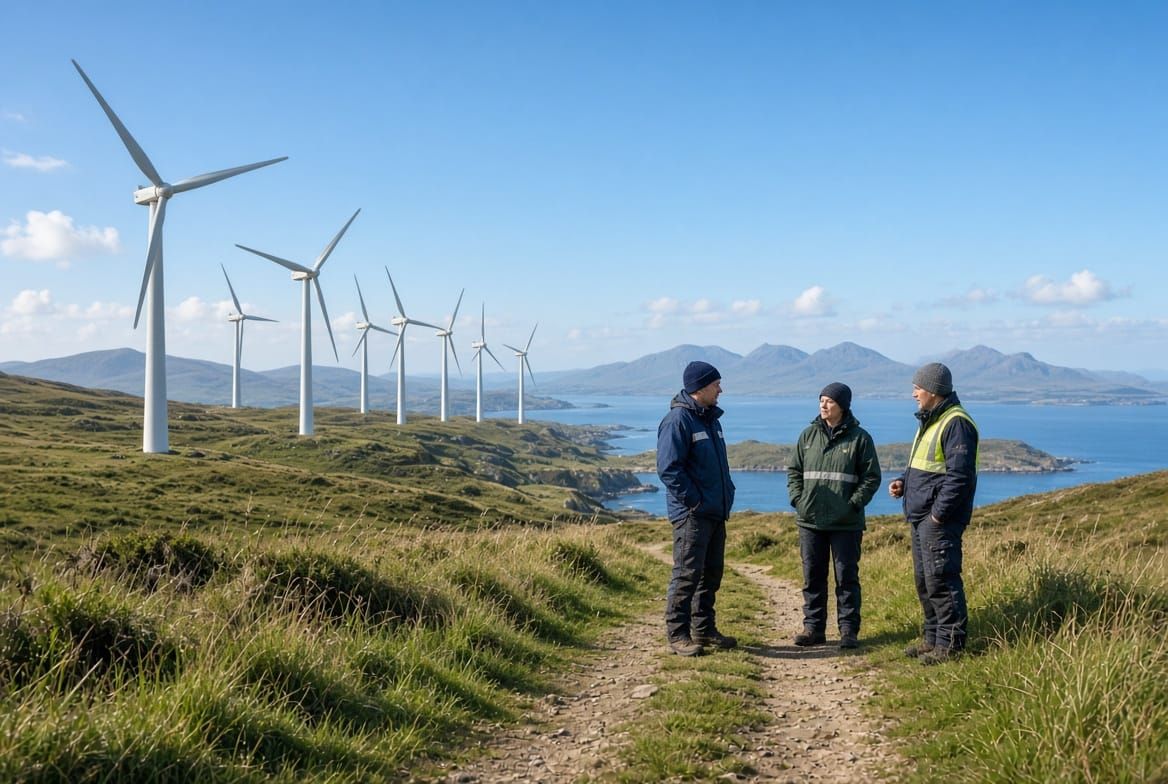
Scotland would set and pursue its own climate and environmental targets under full sovereign control, consistent with the international commitments it chooses to adopt. Policy would prioritise practical emissions reduction in the real economy, energy security, and a just transition for workers and communities affected by the shift away from high-carbon activity — particularly in the North Sea and industrial sectors. Environmental rights could be strengthened in the constitution or in legislation where they create clearer duties, enforceable standards and accessible remedies. Targets would be stretching, reflecting the scale of the emissions challenge, but grounded in delivery plans, available technology and cost rather than unconstrained ambition that ignores workforce, infrastructure, fiscal capacity and public acceptance.
This question matters because climate policy sits at the intersection of energy systems, industrial employment, public expenditure and the credibility of any government that claims to take long-term risks seriously. For households it affects energy costs, the condition of buildings and the reliability of supply. For workers in oil, gas and carbon-intensive industry, it determines whether the transition is managed or simply experienced as decline. For the wider independence prospectus, it tests whether full sovereign control is used to set targets that can be delivered and accounted for, or to inherit or invent ambitions that later have to be quietly abandoned. The main constraints are technological, fiscal and social: emissions reduction on the required scale requires investment and system change that cost real money; the opening fiscal position is already challenging; and a transition that leaves communities behind will fail even if the carbon numbers temporarily look neat. The design choice is deliberate: complete control of the targets and the instruments, explicit alignment with the energy and just-transition framework already set out, and a refusal to treat headline dates as a substitute for pathways.
This question matters because climate policy sits at the intersection of energy systems, industrial employment, public expenditure and the credibility of any government that claims to take long-term risks seriously. For households it affects energy costs, the condition of buildings and the reliability of supply. For workers in oil, gas and carbon-intensive industry it determines whether the transition is managed or simply experienced as decline. For the wider independence prospectus, it tests whether full sovereign control is used to set targets that can be delivered and accounted for, or to inherit or invent ambitions that later have to be quietly abandoned. The main constraints are technological, fiscal and social: emissions reduction on the required scale requires investment and system change that cost real money; the opening fiscal position is already challenging; and a transition that leaves communities behind will fail even if the carbon numbers temporarily look neat. The design choice is deliberate: complete control of the targets and the instruments, explicit alignment with the energy and just-transition framework already set out, and a refusal to treat headline dates as a substitute for pathways.
This section sets out the position. Scotland would set and pursue its own climate and environmental targets under full sovereign control, consistent with international commitments it chooses to adopt. Policy would prioritise practical emissions reduction in the real economy, energy security, and a just transition for affected workers and communities, particularly in the North Sea and industrial sectors. Environmental rights could be strengthened in the constitution or legislation where they add real accountability through clearer duties, enforceable standards and accessible remedies. Targets would be stretching but grounded in delivery plans, available technology and cost, not unconstrained ambition. Full control ends residual UK framework constraints. International obligations are those Scotland accepts and then keeps. Emissions pathways specify sectoral contributions, policies, costs and measurement. Energy security and decarbonisation are designed together through renewables, residual oil and gas under Scottish control, and rUK system cooperation. Workers and communities in high-carbon sectors receive deliberate transition support; a transition that abandons them fails. Public climate expenditure sits inside the fiscal rules and is assessed by the independent fiscal institution. Progress is reported publicly; pathways that become undeliverable are revised transparently. Control sets real pathways; promises match what can be delivered; workers and communities are not left behind. That is the climate and environmental settlement.
Current Position and Legal/Institutional Baseline
Scotland already operates substantial environmental regulation, climate legislation and public bodies responsible for monitoring, permitting and reporting. Residual constraints arise from UK-wide statutory frameworks, participation in the UK Emissions Trading Scheme on current terms, and UK-level carbon budgets and related instruments. Energy systems remain physically integrated across Great Britain. Independence would end residual UK framework constraints on target-setting and instrument design and place full legislative competence over environmental protection, climate change, and related economic instruments in Scottish hands. The institutional baseline includes existing Scottish environmental and energy institutions that already perform most operational functions; a large renewable resource and residual oil and gas production that remain material to both emissions and fiscal capacity; integrated GB electricity and gas systems that create both opportunity and interdependence; a challenging opening fiscal position in which decarbonisation investment competes with every other priority; workforce and community exposure in the North Sea supply chain and in carbon-intensive industry; and the practical reality that targets without pathways produce missed dates and cynicism, while pathways that ignore cost, workforce and public acceptance produce deferred failure.
Independence would not invent climate policy from scratch. The task is to complete full sovereign control of targets and instruments; to remain engaged with international regimes according to the commitments Scotland chooses through treaty succession or accession; to prioritise practical emissions reduction in the real economy through delivery plans that specify sectoral contributions, policies, costs and measurement; to treat energy security and a just transition for affected workers and communities as co-equal with emissions reduction; to strengthen environmental rights only where they create clearer duties, enforceable standards and accessible remedies; and to set stretching targets that are grounded in delivery plans, available technology and cost. International practice in climate policy confirms that sovereign control of targets paired with scored pathways, alignment with energy-system realities, and deliberate support for exposed workforces are the operable instruments; unconstrained headline dates without pathways, or pathways that abandon communities, fail both the delivery test and the social-credibility test.
Mechanism and Delivery
Independence would give Scotland complete authority to set climate and environmental targets and to design the policies that pursue them. Residual constraints that arise from UK-wide statutory frameworks, UK Emissions Trading Scheme participation on current terms, or UK-level carbon budgets would end on Independence Day or according to the staged transfer of functions. Scotland would decide the level of ambition, the time path, the balance of effort across power, buildings, transport, industry, agriculture and land use, and the mix of instruments — regulation, public investment, taxation, carbon pricing, and support for households and firms — used to deliver. The legal mechanism is the transfer of full legislative competence over environmental protection, climate change, and related economic instruments, together with the interim and then permanent constitution’s framework for the state's responsibilities. Operational responsibility would sit with the Scottish Government and with the public bodies already operating in Scotland, expanded or re-mandated as required. Scotland would choose international commitments through treaty succession, new accession, or continued participation on terms it accepts. They would not function as an open-ended external constraint inherited without domestic decision.
Scotland would remain engaged with international climate and environmental regimes in line with the commitments it accepts. Scotland would review the United Nations Framework Convention on Climate Change and the Paris Agreement, relevant biodiversity and pollution conventions, and any successor or complementary instruments as part of the wider treaty-succession process. Where Scotland notifies succession or accedes, it would take on the associated reporting, accounting and cooperation obligations. Where it does not, it would not be bound. Consistency with those commitments would be a matter of Scottish policy choice and of the credibility Scotland wishes to maintain with partners. It would not be residual subordination to decisions taken elsewhere. Scottish statistical and environmental institutions would produce reporting and accounting; cooperation with other states and with the rest of the UK on shared environmental systems would proceed through agreements rather than automatic incorporation of external rules. The same principle that applies to trade, security, and other domains applies here: Scotland chooses the commitments it keeps and is then responsible for keeping them.
Targets matter only if emissions actually fall. Policy would prioritise measures that reduce emissions in the real economy rather than measures that primarily optimise accounting. The principal domains are well understood: power-sector decarbonisation through the accelerated deployment of renewables and the system design that integrates them; energy efficiency and low-carbon heat in buildings; decarbonisation of surface transport and the supporting infrastructure; industrial efficiency and fuel switching where technology and cost allow; and land-use and agricultural measures that work under Scottish conditions rather than under generic assumptions imported from elsewhere. Delivery plans would be required for each major target. A plan would specify which sectors contribute, which policies and investments are expected to deliver the reductions, what the public expenditure and regulatory costs are, how progress is measured, and what happens if a pathway falls behind. The independent fiscal institution would assess the public-expenditure elements against the fiscal rules and the medium-term fiscal plan. Environmental and statistical bodies would report progress on a schedule that allows Parliament and the public to see whether the pathway is being followed. Headline dates without accompanying pathways would not meet the standard of this framework.
Climate policy would be designed in alignment with energy security. Scotland’s large renewable resource, residual oil and gas production under Scottish control, and the existing integration of the GB electricity and gas systems create both opportunity and interdependence. Accelerated renewables deployment is the central long-term contribution to emissions reduction and to export potential. Residual oil and gas, managed as a declining but still material resource, supports security of supply and the fiscal revenues that feed the Wealth Fund during the transition. Formal energy cooperation with the rest of the UK — covering grid operation, interconnectors, capacity, emergency sharing and consumer protection — remains necessary to keep the system reliable and to avoid price and security shocks that the public cannot sustain. A transition that reduces territorial emissions by simply exporting energy insecurity or by exposing households to sustained price spikes will not hold. Security and decarbonisation are therefore treated as co-equal design requirements. The instruments already set out in the energy framework — resource control, Wealth Fund rules, renewables acceleration, just transition support, and the rUK cooperation agreement — are the main delivery mechanisms. Climate targets would be set and pursued in full alignment with that framework, not as a parallel set of promises that contradict it.
Particularly in the North Sea supply chain and in carbon-intensive industrial sectors, the shift away from high-carbon activity would be paired with deliberate support for workers and communities. Skills developed in offshore engineering, project management and related trades are transferable to offshore wind, other renewables, and low-carbon industrial activity; policy would treat that transfer as a strategic objective rather than as an automatic market outcome. Regional economic plans, training and retraining provision, and targeted public investment would be required in areas most exposed to decline in mature oil and gas fields and in high-carbon industry. Resource revenues and the Wealth Fund framework provide some long-term fiscal capacity to support adjustment, subject to the Fund’s own rules on contributions and withdrawals. A transition that is carbon-arithmetic neat but that abandons people will fail politically and socially. The just-transition requirement is therefore built into the climate framework as a condition of credibility, not as an optional social annex. It is the same principle already stated in the energy section: build the new energy economy and take the workforce and the communities with it.
Environmental rights — for example rights concerning clean air, a healthy environment, or procedural rights to information, participation and remedy in environmental decision-making — could be strengthened in the interim or permanent constitution or in ordinary legislation where they add real accountability. Real accountability means clearer duties on public bodies, enforceable standards, and remedies that people and organisations can access without prohibitive cost or delay. Rights that cannot be enforced, that generate indeterminate obligations conflicting with every other policy objective without a mechanism for resolution, or that function mainly as symbolic declarations, would not meet the standard applied elsewhere in this prospectus. The same preference for practical outcomes and enforceable standards over symbolic language that runs through the equality and social rights framework applies here. Where a right strengthens citizens' and courts' ability to hold public bodies to existing or newly legislated environmental duties, it has a place. Where it does not, it is not added for decoration.
Targets would be stretching — serious about the scale of the emissions reductions required if Scotland is to contribute to global climate stability and to maintain credibility with partners — but grounded in delivery plans, available and foreseeable technology, and cost. Unconstrained ambition that ignores the rate at which the workforce can be trained, the rate at which infrastructure can be built, the fiscal capacity available inside the rules, and the degree of public acceptance for costs and lifestyle changes, produces missed targets and cynicism. A pathway would therefore accompany each major target. The pathway would set out sectoral contributions, policy instruments, public expenditure implications, expected private investment, and measurement arrangements. The independent fiscal institution would assess affordability and realism within the wider fiscal framework. The independent fiscal institution would report progress regularly and publicly. If a pathway becomes undeliverable because of technology, cost or social constraint, the honest response is to revise the pathway and the target transparently rather than to maintain a fiction. The framework prefers a target that is met or adjusted in public to a target that is missed in silence.
Climate policy is not a separate domain from the energy and industrial framework already set out. Control of North Sea oil and gas resources, the channelling of a substantial share of net revenues into the Wealth Fund under Norwegian-style rules, the acceleration of offshore wind and other renewables, the just-transition measures for oil and gas workers and communities, and the formal energy cooperation agreement with the rest of the UK are the principal instruments through which emissions reduction and the economic management of the transition will actually occur. Climate targets would be set and pursued in full alignment with that package. A climate target that required abandoning residual oil and gas without a replacement fiscal and industrial pathway, or that ignored the system-stability role of rUK cooperation, would be inconsistent with the rest of the prospectus and would not be adopted.
The legal basis is the transfer of full legislative competence over environmental protection, climate change and related economic instruments, the interim and permanent constitution’s framework for the responsibilities of the state, the energy and Wealth Fund legislation already described, the fiscal rules and independent fiscal institution, and the treaty-succession process for international commitments. The institutional basis includes existing Scottish environmental and energy public bodies, expanded or re-mandated as required, the independent fiscal institution, statistical and reporting bodies, and the courts to enforce any strengthened environmental rights. No new UK agreement is required to set domestic targets or design most instruments. The formal energy cooperation agreement with the rest of the UK is required for reliable system operation and is a high priority precisely because the physical systems are integrated.
On Independence Day, residual UK framework constraints on target-setting and instrument design would end or transfer according to staged arrangements. Existing permits, monitoring and enforcement would continue under legal carry-over. The first operational priorities would be confirming full competence, establishing delivery pathways for major targets with costings scored by the independent fiscal institution, aligning climate policy with the energy and just-transition framework, and reviewing international commitments through the treaty-succession process. Sequencing prioritises continuity of existing environmental functions, then the completion of full control and the publication of grounded pathways, then the normal management of targets under public reporting and independent fiscal scrutiny. There would be no pause in existing permits or enforcement while the longer completion of competence and pathways unfolds.
Continuity Design
Continuity of existing environmental regulation, permits, monitoring and enforcement is a design requirement. Scottish public bodies already perform most operational functions; legal carry-over protects permit and function continuity so there is no gap on Independence Day. Continuity of the energy-system instruments that deliver the bulk of emissions reduction is secured by the resource control, Wealth Fund rules, renewables acceleration, just-transition support and rUK cooperation agreement already set out in the energy framework. Continuity of the discipline that targets require pathways and cost assessment is secured by requiring each major target to be accompanied by a scored pathway and by regular public reporting. The just-transition requirement is secured by explicitly treating support for workers and communities in high-carbon sectors as a condition of credibility rather than an optional annex. The same standard applied to environmental rights applies to equality and social rights: rights are added where they strengthen accountability through clearer duties, enforceable standards, and accessible remedies.
The design therefore treats a break in existing permits or enforcement as a failure; treats headline dates without pathways as incompatible with delivery credibility; and treats full sovereign control, alignment with the energy and fiscal frameworks, scored pathways, and just-transition support as the instruments by which climate and environmental policy is advanced. Control sets real pathways; promises match what can be delivered; workers and communities are not left behind.
Constraints and Trade-offs
Legal constraints
The legal basis includes the transfer of full legislative competence over environmental protection, climate change, and related economic instruments; the interim and permanent constitution; the energy and Wealth Fund legislation; the fiscal rules and independent fiscal institution; and the treaty-succession process for international commitments. The institutional basis includes existing Scottish environmental and energy public bodies, the independent fiscal institution, statistical and reporting bodies, and the courts. No new UK agreement is required for domestic target-setting or for most instruments. The formal energy cooperation agreement with the rest of the UK is required for reliable system operation. Legal design must ensure that existing permits and functions continue, that international commitments reflect what Scotland chooses and keeps, that pathways specify sectoral contributions and costs, and that any strengthened environmental rights create enforceable duties and accessible remedies rather than indeterminate obligations. The foundation is full sovereign control, scored pathways, and alignment with the energy framework.
Fiscal constraints
Decarbonising heat, transport, and industry, and the public share of energy-system investment, are expensive. The opening deficit is large. Climate-related public expenditure competes with every other priority and must be scored and afforded inside the fiscal rules and the medium-term plan. Climate is not exempt from fiscal discipline. The Wealth Fund and residual resource revenues provide long-term capacity subject to their own rules; they do not provide an unlimited off-books budget. If a given pathway's investment cannot be funded, the pathway and the target are adjusted. That discipline keeps the framework credible. Under the opening fiscal position, climate investment faces prioritisation against every other claim; the non-negotiable status of continuity of existing environmental functions and of energy-system reliability supplies the prioritisation rule. Under-estimating the multi-year cost of pathways or the fiscal role of residual resource revenues would leave targets unsupported when tested.
Operational constraints
Emissions reduction on the required scale requires investment and system change that take time. Grid delivery, building retrofit, industrial transition support and workforce training cannot be expanded overnight. The integrated GB electricity and gas systems create interdependence that the formal energy cooperation agreement is designed to manage; without it, system operation and consumer cost would be more difficult. Delivery plans must specify sectoral contributions, policies, costs and measurement; headline dates without pathways fail the standard. Operational sequencing that prioritises continuity of existing functions, then publishes grounded pathways scored by the independent fiscal institution, then manages targets under public reporting reduces the risk of announcement without delivery. Underestimating infrastructure, workforce or system-interdependence constraints would leave pathways without practical content.
Political constraints
A transition that leaves communities behind will fail even if the carbon numbers temporarily look neat. Pressure to adopt unconstrained headline dates without pathways, or to treat just-transition support as optional, is a permanent feature of political competition. Domestic political management must present stretching targets grounded in scored pathways, energy security and just-transition support as the design that matches the scale of the challenge and the requirements of social credibility, must resist both unconstrained ambition that ignores cost and workforce and a slower approach that understates the emissions challenge, and must report progress publicly so that pathways that become undeliverable are revised transparently. Dependence on UK agreement is material for the energy cooperation agreement; it is not required for domestic target-setting. Contingency planning includes maintaining existing environmental functions and the capacity to pursue domestic climate policy even if energy cooperation is incomplete. The trade-off is explicit: complete control of targets and instruments, explicit alignment with the energy and just-transition framework, and a refusal to treat headline dates as a substitute for pathways.
Time constraints
On Independence Day, residual UK framework constraints on target-setting and instrument design end or transfer according to staged arrangements. Existing permits, monitoring and enforcement continue under legal carry-over. The first operational priorities are confirming full competence, establishing delivery pathways for major targets with costings scored by the independent fiscal institution, aligning climate policy with the energy and just-transition framework, and reviewing international commitments through the treaty-succession process. Pathways and infrastructure take years. Delays in maintaining existing functions risk a regulatory gap; delays in publishing grounded pathways leave targets without delivery content; delays in just-transition support risk leaving communities behind. Sequencing driven by continuity of existing functions first, completion of full control and scored pathways next, and normal management under public reporting thereafter is the operable path; unconstrained headline dates without pathways are not.
Consistency with the Wider Framework
Climate and environmental policy sits inside the structure already built across the prospectus. It depends on full control of North Sea resources and on the Wealth Fund as the long-term home for a share of resource revenues. It is delivered primarily through the renewables acceleration and just-transition measures set out in the energy section, and through continued operational cooperation with the rUK energy system. The fiscal rules, the independent fiscal institution, and the medium-term fiscal plan constrain it; climate investment is large and multi-year and cannot sit outside those constraints. It interacts with land reform and rural policy on land-use emissions and stewardship. It is consistent with the broader preference for delivery plans, enforceable standards and measurable outcomes over unconstrained or purely symbolic ambition. Scotland chooses international commitments through the treaty-succession process already described. There is no tension with sterlingisation, the defence and NATO posture, the border arrangements, or the decision not to seek EU membership. Those positions shape the macroeconomic, security and external context. Climate policy operates inside the energy, fiscal and land frameworks that the prospectus places under full Scottish control.
The section aligns with the continuity-first approach applied throughout the framework: existing Scottish environmental and energy institutions and the legal carry-over of permits and functions protect continuity. It aligns with the partnership model of UK relations by giving high priority to the formal energy cooperation agreement while retaining full domestic control of targets and most instruments. In every case, the design subordinates unconstrained headline dates and pathways that abandon communities to full sovereign control, scored pathways, energy security and just-transition support, and subordinates symbolic environmental rights to the preference for clearer duties, enforceable standards and accessible remedies.
Hardest Critiques and Direct Responses
Feasibility
Scotland already has core environmental and energy institutions; independence completes control of the remaining levers and the fiscal resources that fund investment. Capacity still has to be expanded — in grid delivery, in building retrofit, in industrial transition support — and that expansion takes time and money. The framework does not claim instantaneous transformation; it claims the ability to set pathways and to be held accountable for them under full sovereign control. Feasibility depends on continuity of existing institutions, publication of scored pathways, and alignment with the energy and just-transition framework. Feasibility falls only if existing permits and functions are disrupted, if pathways are published without cost assessment, or if just-transition support is treated as optional.
Cost and fiscal burden
Decarbonisation of heat, transport and industry, and the public share of energy-system investment, are expensive. The opening deficit is large. Under the full tax powers and the fiscal rules already set out, the Scottish taxpayer pays. Climate-related public expenditure competes with every other priority and must be scored and afforded inside the rules and the medium-term plan. Climate is not exempt from fiscal discipline. The Wealth Fund and residual resource revenues provide long-term capacity subject to their own rules; they do not provide an unlimited off-books budget. If a given pathway's required investment cannot be funded, the pathway and the target are adjusted. That discipline keeps the framework credible. Underestimating the multi-year cost of pathways would leave targets unsupported when tested. The non-negotiable status of continuity of existing environmental functions and of energy-system reliability supplies the prioritisation rule when fiscal pressure is acute.
Dependence on agreement
Dependence on the United Kingdom is material in one domain: the integrated GB electricity and gas systems. Scotland is a major renewable exporter and also relies on wider system balancing and security of supply. The formal energy cooperation agreement already set out in the energy framework is the mechanism for managing that interdependence. If negotiations on that agreement were slow or adversarial, Scotland would still control its own resources, its own renewables deployment, and its own domestic climate policy; system operation and consumer costs would be harder to manage. The framework treats the cooperation agreement as a high priority precisely because the physical systems are integrated. It does not pretend that independence severs those systems overnight. Contingency planning includes the capacity to pursue domestic climate policy even if energy cooperation is incomplete. Unilateral control of targets and most instruments does not compel residual UK cooperation on system operation.
Transition risk
Transition risk for existing environmental regulation and reporting is limited. Scottish public bodies already perform most of the operational functions. The same legal carry-over that applies to other devolved functions would protect continuity of permits, monitoring, and enforcement. The main transition tasks are completing full competence, establishing any new reporting arrangements required by international commitments Scotland accepts, and aligning residual UK-wide market instruments with Scottish policy choices. Those tasks are manageable within the overall 18–24 month transition design. Residual risk remains: infrastructure, workforce and system change take years, and a transition that leaves communities behind will fail socially. The framework manages that risk by requiring scored pathways, by treating just-transition support as a condition of credibility, and by aligning climate targets with the energy framework already set out.
Alternatives (status quo and previous proposals)
Remaining inside UK frameworks leaves residual constraints on target-setting and instrument design; it is rejected as incomplete. Previous high-ambition Scottish targets that outran delivery capacity and fiscal realism produced a credibility problem that this framework is designed to avoid; they are rejected as incompatible with the requirement for scored pathways. A slower, less stretching approach would understate the scale of the emissions challenge and the industrial opportunity in renewables; it is rejected as insufficient. The design here takes the stretching target as appropriate, insists on an accompanying pathway and cost assessment, and integrates the just-transition requirement so that the policy can hold socially as well as arithmetically. Trading delivery and social credibility for unconstrained headline dates is rejected as the wrong trade-off.
Political and public credibility
The claim most likely to be attacked from opposite directions is that targets can be both stretching and grounded. One side will call any grounding a retreat; the other will call any stretching target unaffordable or technically unachievable. The precise answer is that a target without a pathway is not stretching — it is decorative. A pathway that ignores cost and workforce is not grounded — it is a deferred failure. The framework requires both elements and the public reporting that shows whether they remain aligned. Credibility is earned when pathways specify sectoral contributions and costs, when progress is reported publicly, when pathways that become undeliverable are revised transparently, and when workers and communities in high-carbon sectors receive deliberate transition support. Readers who prefer unconstrained headline dates without pathways, pathways that abandon communities, or the claim that independence automatically delivers emissions reductions are invited to evaluate the framework on the practical requirements of fiscal rules, infrastructure and workforce capacity, and social credibility, and on the coherence of a design that measures success by emissions actually reduced and by communities that are not left behind.
Position Summarised
Scotland would set and pursue its own climate and environmental targets under full sovereign control, consistent with international commitments it chooses to adopt. Policy would prioritise practical emissions reduction in the real economy, energy security, and a just transition for affected workers and communities, particularly in the North Sea and industrial sectors. Environmental rights could be strengthened in the constitution or legislation where they add real accountability through clearer duties, enforceable standards and accessible remedies. Targets would be stretching but grounded in delivery plans, available technology and cost, not unconstrained ambition. Full control ends residual UK framework constraints. International obligations are those Scotland accepts and then keeps. Emissions pathways specify sectoral contributions, policies, costs and measurement. Energy security and decarbonisation are designed together through renewables, residual oil and gas under Scottish control, and rUK system cooperation. Workers and communities in high-carbon sectors receive deliberate transition support; a transition that abandons them fails. Public climate expenditure sits inside the fiscal rules and is assessed by the independent fiscal institution. Progress is reported publicly; pathways that become undeliverable are revised transparently. Control is used to set real pathways; promises match what can be delivered; workers and communities are not left behind. That is the climate and environmental settlement.
Conclusion
Independence would give Scotland full authority to set climate and environmental targets and to choose the international commitments it keeps. The core stance is that delivery pathways must accompany targets, that energy security and a just transition for affected workers and communities are co-equal with emissions reduction, and that environmental rights are added where they strengthen accountability rather than for symbolism. The continuity test is met by the existing Scottish environmental and energy institutions and by the legal carry-over of permits and functions. The design test is met by explicit alignment with the energy and fiscal frameworks, by the requirement for scored pathways, and by the refusal to treat headline ambition as a substitute for delivery. The limit of the claim is equally clear: independence provides control and accountability; it does not provide unlimited fiscal capacity, instantaneous technology deployment, or automatic social acceptance of costs. Targets grounded in plans, technology, and cost can be pursued with credibility; targets that cannot are adjusted in public. That is the standard.
Series Footer
This analysis forms part of People’s Future Scotland: The Independence Debate, a non-party framework examining the practical design of independence. Each section is written to withstand professional scrutiny and to prioritise mechanism, constraint and continuity over aspiration.