4.4 Scottish Armed Forces – Size, Structure, Budget
Scotland would maintain a professional, high-quality force sized appropriately for its population and strategic location — comparable in scale and ambition to Norway or Denmark.

What size and structure would Scotland maintain for its armed forces?
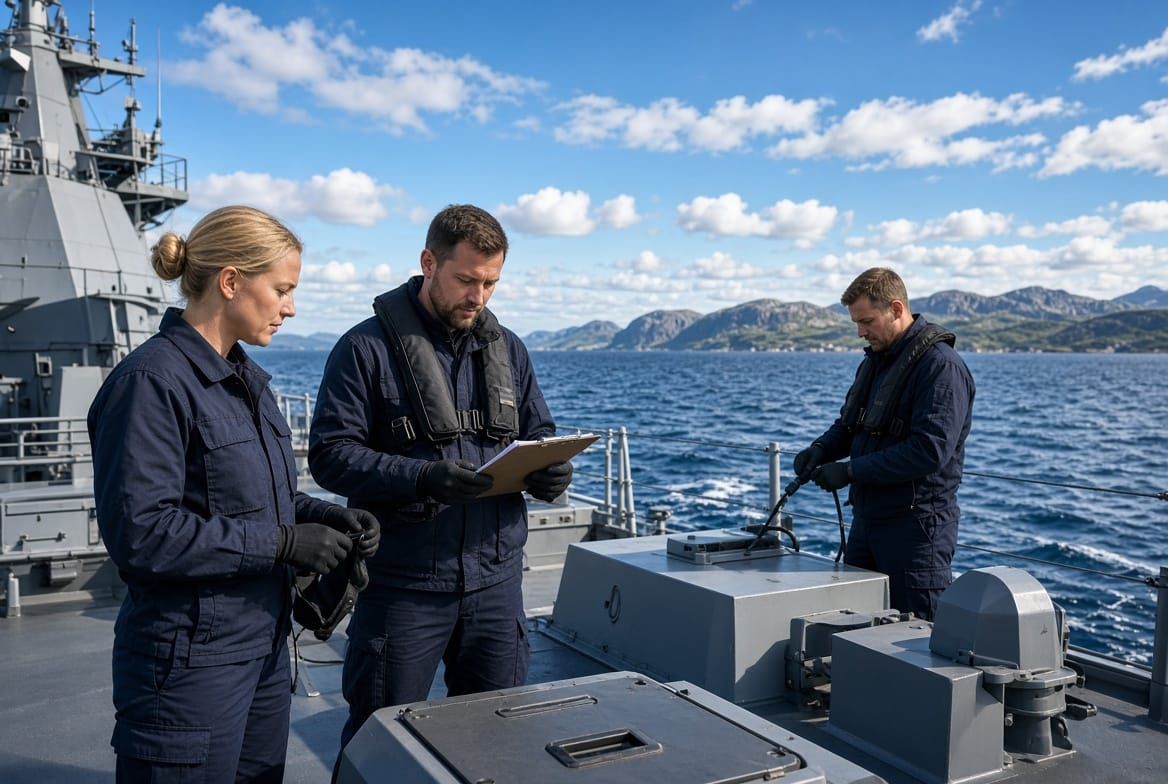
Scotland would maintain a professional, high-quality force sized appropriately for its population and strategic location — comparable in scale and ambition to Norway or Denmark. It would prioritise naval and maritime capabilities, air defence and surveillance, specialised units, and resilience forces. The defence budget would be set at a level consistent with Scotland’s NATO contribution path — aligned with a 5% of GDP defence effort — and with Scotland’s security needs, focusing on capability rather than large standing numbers. Existing UK personnel and expertise based in Scotland would form a core of the new force during the transition.
Force design is where NATO membership and the nuclear basing decision become concrete. A membership pledge without usable forces is a free-rider posture. A high spending path without a structure matched to geography is waste. This section sets the scale benchmark, the structural priorities, the resource envelope and the transition path from UK-based personnel and infrastructure to a Scottish force that can operate with Allies from the start.
The main constraints are fiscal (a 5% of GDP defence effort is a very large claim against the opening deficit), personnel (recruitment, retention and transfer terms), and time (building coherent units takes years, not months). The main design choice remains specialisation: maritime and northern roles over a thin imitation of a larger power across the full spectrum. A higher budget buys depth, readiness, stockpiles and sustainment in those roles — not an excuse to dilute focus. Quality, readiness and interoperability take priority over headline headcount.
Force design turns the strategic choices in the preceding sections into concrete decisions. Full NATO membership on equal terms, a defence effort aligned with a 5% of GDP contribution level, and the decision to continue hosting the UK nuclear deterrent under a long-term treaty-based agreement all require a Scottish armed force that is professional, interoperable and matched to geography. A membership pledge without usable forces is a free-rider posture. A high spending path without a structure matched to the northern maritime theatre is waste. This section therefore sets the scale benchmark, the structural priorities, the resource envelope and the transition path from existing UK personnel and infrastructure to a Scottish force that can operate with Allies from the outset.
Scotland would maintain a professional force comparable in scale and ambition to those of Norway or Denmark — small, high-income European NATO members with strong maritime traditions and northern or near-northern geography. Priority would be given to naval and maritime capabilities, air surveillance and defence, specialised high-readiness units, and resilience forces oriented toward homeland protection and support to civil authorities. The defence budget would be aligned with the 5% of GDP path already set out, sequenced through the transition and the medium-term fiscal plan, and focused on ready, well-equipped units rather than hollow structures or numerical prestige. Existing UK military personnel, expertise, and base infrastructure in Scotland would form the core of the new force during the build-up.
The design choice is deliberate specialisation. Resources would be concentrated where Scotland can add most value to collective defence and to its own security. Heavy emphasis on large armoured or expeditionary land formations designed for distant high-intensity campaigns would not be the priority. A higher national defence effort raises the standard of readiness, equipment completeness and sustainment that the same scale of force must meet; it does not justify an unfocused catalogue of capabilities. Quality, relevance and sustainability would guide every major choice. A detailed defence review during the transition would set exact unit numbers against that benchmark.
Current Position and Legal/Institutional Baseline
Scotland currently has no separate armed forces. Its territory hosts significant UK military infrastructure and personnel, including the naval and nuclear facilities at Faslane and Coulport, air capabilities centred on RAF Lossiemouth, and a range of supporting units and industrial capacity. Scottish citizens serve in the UK armed forces under UK terms and conditions, command structures and NATO interoperability standards. Scotland has no distinct defence budget, procurement system, or personnel regime.
Independence would change the legal baseline. Sovereignty over the territory and the capacity to raise and maintain armed forces would transfer to the Scottish state. The physical bases, the pool of personnel already serving in Scotland, the industrial skills base and the existing interoperability relationships with NATO Allies would remain. The institutional task is to create a Scottish legal and organisational framework for the armed forces, arrange the orderly transfer or continued service of personnel who choose to join the new force, and align doctrine, equipment standards, and command arrangements with Alliance requirements from the start.
The relevant international baseline is the force structure of successful small NATO Allies with comparable geography and strategic culture. Norway and Denmark field professional forces measured in the tens of thousands, prioritise maritime and northern or Baltic roles, maintain high levels of interoperability, and sustain quality and readiness within disciplined budgets. Those forces provide the scale and ambition benchmark. A 5% resource path does not change the benchmark model; it raises the expectation that the same scale of force will be better equipped, more intensive in training, and more robust in sustainment than a minimal guideline would support.
Mechanism and Delivery
The mechanism for establishing the Scottish Armed Forces is primary legislation creating the legal basis for the force, a defence review conducted during the transition to set detailed structure and numbers against the published benchmark, and transitional arrangements for personnel, bases and command. The defence review would translate the strategic priorities — maritime and anti-submarine warfare, air surveillance and control, specialised deployable units, and resilience — into concrete unit structures, equipment priorities and personnel requirements. It would do so under the resource envelope of the 5% path as sequenced in the medium-term fiscal plan.
Personnel transfer would be voluntary and on fair terms. Serving UK personnel based in Scotland who wish to join the Scottish armed forces would be able to do so under arrangements that protect rank, pension rights, career continuity and conditions of service to the greatest extent practicable. Legal and terms-and-conditions work for those transfers must be prepared in the transition; uncertainty over pensions, rank equivalence and career paths is a standard risk in force separation and must be designed out early. A core of experienced personnel, together with the existing base infrastructure, would give the new force a running start. Recruitment, training and retention policies would then build the sustained Scottish force over subsequent years. A higher long-term budget supports retention incentives, training intensity and through-life equipment support; it does not remove the need for fair transfer terms on day one.
Procurement and equipment standards would prioritise interoperability with NATO Allies and value for money within the focused role set. Higher resources would increase the number of ready platforms, training days, munitions stockpiles, and sustainment rather than invent unrelated missions. Command arrangements would be designed for Alliance interoperability from the outset, with interim arrangements ensuring that essential tasks — including support to the nuclear basing mission, maritime surveillance and air policing — continue without a capability cliff-edge during the build-up.
Delivery is therefore a multi-year programme: a legal foundation and core personnel on Independence Day and in the immediate transition; a progressive build of coherent units, training pipelines, and equipment completeness over the following years; and continuous alignment of the force with the published spending trajectory and Alliance expectations. Independence Day does not claim fully mature parity with the benchmark Allies; the running start from existing people and bases makes a credible early contribution achievable while the force matures.
Continuity Design
Continuity of essential military tasks and of the personnel and industrial base that support them is a design requirement. Support to the nuclear basing mission under the long-term treaty agreement, maritime and air surveillance in the northern approaches, and the protection of critical infrastructure would continue without interruption. Interim command arrangements, dual-running where necessary, and clear public communication would ensure no capability cliff-edge on Independence Day.
Fair transfer terms would secure continuity of personnel rights for those who choose to join the Scottish force, and arrangements that protect the position of those who remain with UK forces or leave the service. Pension, rank, and career continuity are practical necessities for retaining critical skills; they are also consistency requirements of the wider continuity design for public-service and contractual rights. The base-retention policy and the nuclear basing agreement itself secure continuity of base infrastructure. Continuity of interoperability standards and training relationships with Allies reduces the risk that the new force starts from a lower readiness baseline.
The design therefore builds the Scottish force outward from existing people, bases and relationships rather than treating independence as a standing start. Gaps in readiness or loss of specialists during transfer remain real risks; interim arrangements, retention incentives supported by the higher resource path, and prioritisation of critical trades mitigate them.
Constraints and Trade-offs
Legal constraints
Creating the armed forces requires primary legislation that defines their legal basis, command authority, civilian control, and disciplinary regime. Personnel transfer arrangements must be compatible with existing UK terms of service and with Scottish employment and pension law. Status-of-forces interfaces with the UK nuclear basing agreement and with other Allied forces must be clear. Treaty obligations arising from NATO membership will shape doctrine, standards and some operational authorities. These constraints are manageable through the legislative and treaty-making capacity already required by the wider framework, yet they require precise drafting and timely preparation.
Fiscal constraints
A defence budget aligned with a 5% of GDP path is a major fiscal line, especially against a large opening structural deficit and an initial sovereign borrowing premium. It competes sharply with other claims inside the medium-term fiscal plan and intensifies the prioritisation already required by the legislated fiscal rules. The Scottish budget bears the cost through taxation and through lower spending elsewhere than would otherwise be possible. That trade-off is explicit. Hollow forces that exist on paper but lack training, spares, munitions, and retention would waste an even larger envelope; the structure-before-mass rule is therefore more important, not less, under a high-spending path. Interim milestones must be published and delivered so that the trajectory is visible in actual budgets rather than only in a distant end-point.
Operational constraints
Building coherent units, training pipelines and equipment completeness takes years. A fully mature Norway- or Denmark-comparable force is not feasible on Independence Day; it is feasible over a multi-year horizon if budget, personnel transfer and procurement are prioritised. Critical specialist trades — particularly in maritime, nuclear-support, aircrew and technical fields — are finite and mobile. Loss of those specialists during transition would create readiness gaps that money alone cannot immediately fill. Interoperability with Allies must be maintained and deepened, not broken and recreated. Higher resources help, but only if they are converted into training days, stockpiles, through-life support and retainable people rather than into unfilled establishment posts.
Political constraints
Force structure and budget choices will face domestic political contestation, both from those who prefer a lower defence effort and from those who may favour a broader or more symbolic force posture. Sustaining a specialised, high-resource model across electoral cycles requires consistent explanation of the geographic and Alliance rationale and of the opportunity costs. Personnel transfer depends on voluntary decisions by individuals; residual risk that critical numbers or skills do not transfer must be acknowledged and mitigated by recruitment and by diversified training partnerships with other Allies. The higher spending path is a strategic prioritisation choice; it will be judged by whether it appears in ready forces, not only in declarations.
Time constraints
Legal foundations, transfer terms and interim command arrangements must be ready for Independence Day. The defence review that sets detailed structure against the published benchmark must be completed early in the transition. Recruitment, training and procurement lead times mean that the force matures over years, not months. A credibility gap between a 5% ambition and early budgets that lag far behind would invite accusations of bad faith from Allies and from domestic critics. Mitigation is a published trajectory with interim delivery milestones, prioritisation of critical capabilities for early readiness, and clear communication that essential tasks continue without a cliff-edge while the force builds.
Consistency with the Wider Framework
Force structure implements the NATO contribution model, including the 5% effort path, and complements the nuclear basing agreement. Hosting the Continuous At-Sea Deterrent under treaty is a high-value Alliance contribution that sits alongside, not in competition with, the development of Scottish forces; both form part of the same northern security package. The specialised maritime and northern focus drives base policy and creates demand for the defence industrial base — shipbuilding, maritime systems, sustainment and related skills — that the following sections address.
The higher defence path sits inside the fiscal rules and the medium-term fiscal plan; it intensifies prioritisation elsewhere in the budget and is subject to the same independent scrutiny as other major spending. It relies on institutional continuity for its legal basis and on personnel and base continuity for early capability. It does not require changes to the sterlingisation monetary regime or to borders and movement policy. Intelligence and cyber capabilities form part of the same comprehensive security set; they complement naval and air forces, not substitute for them. Constitutional continuity supplies the legislative and treaty capacity required to establish the force and to integrate it into Alliance structures. In every case, the size, structure and budget of the armed forces are the operational expression of the membership, contribution and basing choices already made.
Hardest Critiques and Direct Responses
Feasibility
Building a professional force comparable in scale and ambition to those of Norway or Denmark is feasible over a multi-year horizon if budget, personnel transfer and procurement are prioritised. It is not feasible as a fully mature mirror of those Allies on Independence Day. The transition path — core from existing UK personnel and bases already located in Scotland, then progressive build — remains the realistic sequence. Delivering force quality consistent with a 5% path is feasible only if rising resources are converted into readiness, stockpiles, training and retainable people rather than into unfilled posts and delayed programmes. International experience shows that small states can field serious, specialised forces when they focus and sustain; it also shows that headline numbers without readiness fail the Alliance test.
Cost and fiscal burden
Defence aligned with a 5% of GDP path is a major fiscal line that competes sharply with other claims inside the medium-term plan. The cost is real and is borne through taxation and through lower spending elsewhere than would otherwise be possible. Hollow forces that lack training, spares and retention would waste an even larger envelope; the requirement for specialised structure and usable capability is therefore stricter, not looser, under a high spending path. The framework accepts the opportunity costs as the price of a high-effort contributor posture and manages them through the same fiscal rules and independent scrutiny that govern the rest of the budget. Minimal or token effort would fail the membership and security tests; high effort that fails to produce readiness would fail the credibility test.
Dependence on agreement
Dependence on the United Kingdom is high for orderly personnel transfer, shared training pipelines in the early years and some logistics support. Adversarial non-cooperation would slow the build and raise costs; it would not remove the need for a Scottish force or the geographic requirement for northern maritime capability. Contingency planning includes accelerated national recruitment, retention incentives for critical trades, and diversified training and exercise partnerships with other Allies. The nuclear basing agreement itself creates a structured channel for practical cooperation on the most sensitive mission; wider force-building cooperation is desirable and would be sought, but is not a legal precondition for the existence of the Scottish force.
Transition risk
Gaps in readiness, loss of specialists, or confused chains of command during personnel and command transfer are material risks. Mitigation includes interim command arrangements that preserve essential tasks, fair and early transfer terms that reduce uncertainty for individuals, retention incentives for critical trades supported by the higher resource path, and clear public communication to ensure support to the basing mission, maritime and air surveillance, and critical infrastructure protection continues without a capability cliff-edge. A further risk is a credibility gap between a 5% ambition and early budgets that lag far behind; mitigation is a published trajectory with interim delivery milestones that Allies, markets and the public can measure.
Alternatives (status quo and previous proposals)
A token force below serious Alliance contribution is incompatible with the NATO membership case and with a high spending path; it is rejected. An attempt to replicate a large-state full-spectrum force remains unfocused even with higher resources and would dilute the northern maritime contribution; it is rejected. High spending without force redesign risks paying more for the same hollowness; it is rejected in favour of specialised structure plus serious resources. Delaying force-building until after accession leaves a capability gap and weakens the accession case; it is rejected in favour of parallel build and application. Reliance on UK forces indefinitely without a Scottish structure is incompatible with sovereignty and with equal Ally status; it is rejected. The design chooses a Norway- or Denmark-comparable professional force, specialised for maritime and northern roles, funded on a 5% path, and built outward from existing people and bases.
Political and public credibility
The claim most likely to be called unrealistic is that Scotland can field a Norway- or Denmark-comparable force and fund defence at a 5% of GDP effort while managing a large fiscal deficit, or that enough UK personnel would transfer to give the force a viable core. The precise answer is that the force benchmark is scale and ambition over a multi-year horizon, not instant parity on day one; that 5% is a prioritised strategic choice with explicit opportunity costs inside the fiscal rules and the medium-term plan; that transfer is voluntary, on fair terms, and supplemented by recruitment, with residual risk acknowledged and mitigated; and that credibility is measured by readiness, retention, budget outturns and usable contribution to Alliance tasks — not by brochure headcount or by a percentage figure in isolation. Readers who prefer a smaller force or a lower spending effort are invited to evaluate the framework on that clear disagreement.
Position Summarised
Scotland would maintain a professional force comparable in scale and ambition to those of Norway or Denmark, prioritising naval and maritime capabilities, air surveillance and defence, specialised high-readiness units and resilience forces. The defence budget would align with a 5% of GDP contribution path, sequenced through the transition and the medium-term fiscal plan, and focus on usable capability, readiness and sustainment rather than numerical prestige or an unfocused full-spectrum catalogue.
Existing UK personnel and expertise based in Scotland would provide an important foundation during transition, under voluntary transfer on fair terms. The force structure would match the strategic roles Scotland intends to play in NATO: a serious northern maritime Ally with air surveillance depth, specialised deployable elements and homeland resilience — not a miniature replica of a larger power. Quality, relevance, interoperability and sustainability would guide every major choice. A transition defence review would set exact unit numbers against that benchmark, with rising resources used to deepen readiness in priority roles.
Conclusion
Size and structure follow role. Scotland’s role in this framework is a northern maritime Ally with air surveillance depth, specialised deployable elements and homeland resilience — funded on a path aligned with a 5% of GDP defence effort, built from existing people and bases outward, and interoperable by design. That is a demanding programme under fiscal pressure; it is also coherent.
The alternative is either a token force that free-rides on others or a high-spending structure that fails to produce readiness in the missions that matter. Both would fail the membership and security tests. The benchmark Allies show that small states can field serious forces when they specialise and sustain. Scotland would take that path with a higher national effort, and would be judged on whether the effort appears in trained, equipped, retainable forces that can operate with Allies from the start. The next sections place those forces on bases, back them with intelligence and cyber capacity, and tie them to the industrial base that must equip and maintain them.
Series Footer
This analysis forms part of People’s Future Scotland: The Independence Debate, a non-party framework examining the practical design of independence. Each section is written to withstand professional scrutiny and to prioritise mechanism, constraint and continuity over aspiration.