8.3 Energy Cooperation with the Rest of the UK
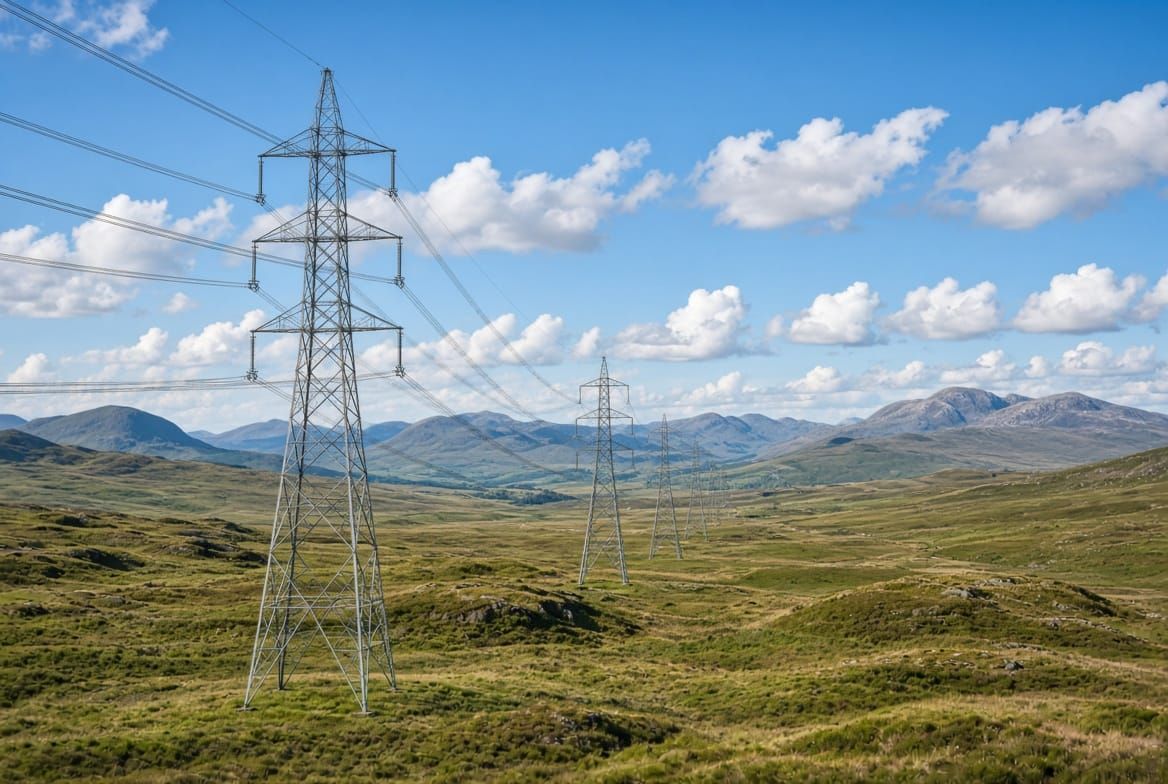
The GB systems are highly integrated; Scotland is a major exporter of renewable electricity southwards and relies on wider system balancing and supply security.

How would the electricity and gas systems work with the rest of the UK?
Scotland and the rest of the UK would maintain close operational cooperation on electricity and gas. The GB systems are highly integrated; Scotland is a major exporter of renewable electricity southwards and relies on wider system balancing and supply security. A formal energy cooperation agreement would cover grid operation, interconnectors, capacity markets, emergency sharing and consumer protection mechanisms. The goal is cost-efficient, reliable energy for households and industry on both sides of the border, not weaponising resources.
Great Britain's electricity and gas systems were built and operated as integrated networks. Scotland generates a large and growing share of renewable electricity — particularly from onshore and offshore wind — and exports power southwards for much of the time. At the same time, Scotland depends on the wider GB system for balancing, for security of supply when renewable output is low, and for operating shared gas infrastructure. Neither side is energy-independent in operational terms.
Independence does not dissolve that physical and economic interdependence. It requires managing that interdependence through agreement between two sovereign parties rather than through internal UK arrangements. The main design choice is structured cooperation through a formal agreement, not an attempt to separate systems designed to work together. The main constraints are the need for UK agreement on operational details, the technical complexity of operating systems across a new border, and the requirement to protect consumers and investment during transition. Continuity of supply and market functioning is a design requirement. Resources are not weaponised; interdependence is managed by agreement.
Great Britain's electricity and gas systems were built and operated as integrated networks. Scotland generates a large and growing share of renewable electricity — particularly from onshore and offshore wind — and exports power southwards for much of the time. At the same time, Scotland depends on the wider GB system for balancing, for security of supply when renewable output is low, and for operating shared gas infrastructure. Neither side is energy-independent in operational terms. Transmission lines, balancing markets, gas pipelines and emergency protocols were built for a single system. Treating these flows as optional or purely political would raise costs and risks for households and industry on both sides.
Independence does not dissolve that physical and economic interdependence. It requires that two sovereign parties manage the interdependence by agreement rather than through internal UK arrangements. This section sets out that design. Scotland and the rest of the UK would maintain close operational cooperation through a formal energy cooperation agreement covering grid operation and system balancing, interconnectors and transmission capacity, capacity and security of supply, emergency sharing, and consumer protection and market arrangements. The goal is cost-efficient, reliable energy for households and industry on both sides of the border. Resources are not weaponised. Cooperation on electricity and gas systems is distinct from ownership and control of oil and gas resources and from channelling resource revenues into the Wealth Fund. Resource sovereignty and system cooperation operate together. Continuity of supply and market functioning is a design requirement. High-level political statements without operational annexes would not meet the continuity test.
Current Position and Legal/Institutional Baseline
Great Britain’s electricity and gas systems currently operate as integrated networks under UK-wide regulatory and operational frameworks. Scotland is a significant and growing source of renewable generation, with substantial southward flows for much of the time. Scotland also relies on the wider system for balancing services, for security of supply during periods of low renewable output, and for aspects of gas infrastructure and storage. System operation, capacity mechanisms, emergency protocols and consumer-protection arrangements are organised on a GB basis. No international operational border for electricity or gas exists between Scotland and the rest of Great Britain.
Independence would change the legal and institutional frame, not the physics. Two sovereign regulators, two sets of political accountability and the need for a formal cross-border agreement would replace internal UK arrangements. The institutional baseline includes experienced system operators, a mature regulatory framework and deep technical interdependence. The task is to convert that interdependence into a binding operational framework between two states so that reliability, cost-efficiency and investment certainty are preserved. International practice on interconnectors and cross-border system operation demonstrates that sovereign boundaries and operational integration can coexist when the rules are detailed, technical and mutual.
Mechanism and Delivery
The mechanism is a bilateral treaty-level or equivalent formal agreement, supported by memoranda between system operators and regulators, and given effect in domestic law on each side. Scottish legislation would establish the Scottish regulatory authority's powers and the duties of Scottish network companies to cooperate under the agreement. Without a binding operational framework, goodwill alone will not manage real-time balancing or emergency response. Institutional capacity includes a competent Scottish energy regulator, system-operator capability (or contracted arrangements), and data-sharing protocols. These form part of the day-one and early-years institutional build.
Core elements of the agreement would include arrangements for the coordinated operation of the transmission systems, the management of constraints, and the balancing of supply and demand across the former GB network; rules governing the use of existing cross-border transmission capacity and the development of further interconnection where it benefits both sides; mechanisms that allow each side to contribute to and benefit from capacity adequacy and emergency support, so that households and industry on both sides retain reliable supply; clear protocols for mutual assistance in the event of major outages, extreme weather or other system emergencies; and provisions that protect consumers from abrupt disruption to pricing mechanisms, supplier arrangements and vulnerable-customer protections during and after the transition, while allowing each side to develop its own retail and regulatory framework over time. The agreement would be technical, detailed and designed for operational reliability. It would be negotiated as part of the wider independence settlement and reviewed as systems and markets evolve.
Sequencing would prioritise continuity of physical flows and market settlement from Independence Day: transitional application of existing operational codes where necessary, early agreement on emergency protocols, and phased introduction of any distinct Scottish retail or support-scheme arrangements. Sudden changes to imbalance pricing, constraint management or supplier-of-last-resort arrangements would be avoided. Full regulatory divergence, where chosen, would follow once the cooperation backbone is stable. Generators, network operators, and large energy users need clarity about the rules under which the cross-border system will function; the agreement would provide that clarity and thereby support continued investment in Scottish renewable generation, transmission, and the flexibility and storage that a high-renewables system requires.
Continuity Design
Continuity of supply and market functioning is a design requirement. Transitional application of existing operational codes, early emergency protocols, and clear public and industry communication on what changes and what does not would reduce the risk of settlement failures, unclear operator responsibilities or consumer confusion on Independence Day. The agreement's transitional provisions would secure continuity of consumer protections — pricing mechanisms, supplier arrangements and vulnerable-customer schemes — so households and businesses do not face abrupt disruption.
A durable operational framework supports continuity of investment certainty by reducing the risk premium on Scottish renewable generation and on network and flexibility assets. Continuity of data and technical working-level contact during negotiation supports interim operational stability if the full agreement takes time to finalise. The design therefore treats energy-system continuity as parallel to the continuity choices already made for currency, contracts, borders and high-volume regulatory rules. A settlement that claimed energy advantage while leaving system operation and consumer protections uncertain would undermine both the investment case and public confidence.
Constraints and Trade-offs
Legal constraints
A functioning cooperation framework requires a binding bilateral agreement and domestic legislation giving effect to regulatory powers and network-company duties. Transitional application of operational codes must be legally robust. Consumer-protection continuity requires clear allocation of responsibilities during and after the transition. Regulatory divergence, where Scotland chooses it, must be compatible with the operational backbone; unconstrained divergence that fragments market settlement or emergency response would raise costs and risks. Legal design must separate system cooperation from oil and gas resource disputes so that day-to-day power flows are not contaminated by revenue or boundary politics.
Fiscal constraints
Cooperation itself is primarily an institutional and regulatory cost, modest relative to generation and network investment. The larger cost risk is the absence of cooperation: higher balancing costs, stranded renewable output, or emergency measures. Those costs would fall on consumers and taxpayers on both sides. The fiscal framework benefits from lower system costs and from the investment certainty that supports renewable deployment and associated activity. Under the opening fiscal position, avoiding unnecessary system-cost inflation contributes to affordability and the credibility of the energy transition.
Operational constraints
Real-time balancing, constraint management, capacity adequacy and emergency response are technically complex. They require data sharing, compatible operational codes, and competent institutions on both sides. Building or designating Scottish regulatory and system-operator capacity takes time. Transitional reliance on existing codes and working-level contact can bridge gaps but is inferior to a full formal agreement. Operational sequencing that prioritises continuity of flows and emergency protocols from day one is essential. Under-investment in Scottish networks or flexibility if cross-border access is uncertain would slow the energy transition and raise long-term costs.
Political constraints
The principal political risk is contamination of operational cooperation — using power flows or interconnection as leverage in other disputes. Both sides have strong operational and economic incentives to cooperate, but incentives do not replace a signed operational framework. A broader adversarial negotiation makes detailed energy cooperation harder. Domestic political management must frame cooperation as mutual interest: Scotland sells power and related services into a large market; the rest of the UK gains access to renewable generation and northern system support; consumers on both sides benefit from a larger, more flexible system. Weaponisation would damage both sides’ consumers and investors and is rejected.
Time constraints
Transitional operational protocols and emergency arrangements should be in place for Independence Day. The full formal agreement may take longer to negotiate and ratify; interim continuity must bridge the gap. The Scottish side must advance regulatory and system-operator capacity early. Investment decisions in renewables, transmission, and flexibility depend on clarity about cross-border access; delays in providing that clarity raise the cost of capital and slow deployment. Sequencing that stabilises the operational backbone before pursuing extensive retail or support-scheme divergence protects continuity.
Consistency with the Wider Framework
Energy cooperation with the rest of the UK sits alongside Scottish control of North Sea oil and gas resources; the Wealth Fund as the long-term home for a share of resource revenues; the priority given to the rUK relationship in trade and people movement; the overall partnership approach to defence, security and practical cross-border systems; and the focus on consumer energy costs and the just transition. The pattern is consistent: where systems are integrated, and both sides benefit from cooperation, formal agreements manage the relationship; where resources and revenues fall to Scotland, control and long-term value capture remain Scottish.
Cooperation protects the bankability of Scottish renewables and the security of supply that households and industry require. It does not dilute resource sovereignty or the Fund’s accumulation rule. It aligns with the investment-attraction case by reducing avoidable uncertainty for energy and energy-intensive projects. It aligns with fiscal realism by avoiding the higher system costs that would follow from attempted separation or from politically induced disruption. It is consistent with sterling continuity and contract continuity, which support commercial predictability in the energy sector as elsewhere. In every case, system cooperation is the operational backbone that makes large-scale renewable deployment bankable and keeps security of supply credible while oil and gas production declines.
Hardest Critiques and Direct Responses
Feasibility
Operational cooperation across a political border is feasible; it already occurs on multiple European interconnectors and in other integrated systems that cross sovereign boundaries. It requires detailed agreement and competent institutions, not heroic assumptions. Feasibility fails only if the agreement remains at the level of political statements without operational annexes, if transitional codes are neglected, or if regulatory and system-operator capacity on the Scottish side is left unbuilt.
Cost and fiscal burden
Cooperation itself is primarily an institutional and regulatory cost. The larger cost risk is the absence of cooperation: higher balancing costs, stranded renewable output, or emergency measures borne by consumers and taxpayers. The fiscal framework benefits from lower system costs and from investment certainty. Under-investment in the cooperation framework would be a false economy relative to the system-cost and investment consequences of fragmentation or disruption.
Dependence on agreement
Dependence on the United Kingdom is high for a functioning cooperation framework. Scotland cannot unilaterally compel the rest of the UK to maintain integrated balancing or emergency support. The incentive structure is mutual — Scotland’s renewables and the south’s demand and balancing resources need each other — but incentives do not replace a signed operational framework. Contingency planning for reduced cooperation would mean higher domestic flexibility and storage costs and greater price volatility. A full formal agreement remains the superior outcome.
Transition risk
Settlement failures, unclear operator responsibilities on day one, or consumer confusion about suppliers and protections are material risks. Mitigation is transitional continuation of operational codes, early emergency protocols, and clear public and industry communication on what changes and what does not. Residual uncertainty during final negotiation of the full agreement cannot be eliminated; interim protocols and prioritising continuity of physical flows and consumer protections manage it.
Alternatives (status quo and previous proposals)
Full system separation would raise costs and security risks for both sides and is rejected. Informal, non-binding cooperation would leave investment and emergency response exposed to political weather and is rejected. Using energy exports as leverage in broader negotiations would damage the investment case and consumer interests this framework prioritises and is rejected. Formal, technical, mutual-interest cooperation is the superior design. Conflating system cooperation with oil and gas resource disputes is rejected; the framework keeps them separate so that day-to-day power flows are not contaminated by revenue or boundary politics.
Political and public credibility
The claim most likely to be called unrealistic is that the rest of the UK would readily agree to continued deep cooperation, or that independence changes nothing for energy users. The precise answer is that both sides have strong operational and economic incentives to cooperate, but they still have to negotiate and write down an agreement. Independence does change institutional accountability, while the physical system remains interdependent. Credibility is a signed operational framework, stable cross-border flows and the absence of politically induced disruption — not assurances that “nothing will change” without machinery. Readers who prefer system separation, informal cooperation, or using energy as leverage are invited to evaluate the framework on the physics of the integrated system and the consumer and investment costs of disruption.
Position Summarised
Scotland and the rest of the UK would maintain close operational cooperation on electricity and gas through a formal energy cooperation agreement covering grid operation, interconnectors, capacity markets, emergency sharing and consumer protection. The GB systems are highly integrated; Scotland is a major renewable exporter and also relies on wider system balancing and security of supply.
The goal is cost-efficient, reliable energy for households and industry on both sides of the border. Resources are not weaponised; interdependence is managed by agreement. Cooperation protects consumers and investment; sovereignty over oil and gas resources and the channelling of their revenues into the Wealth Fund remain intact. Transitional operational codes and early emergency protocols support continuity of supply and settlement from Independence Day. Full regulatory divergence, where chosen, follows once the cooperation backbone is stable.
Conclusion
How would the electricity and gas systems work with the rest of the UK? Through a formal cooperation agreement that manages an integrated physical system between two sovereign parties — covering operation, interconnection, capacity, emergencies and consumer protections — with the explicit purpose of reliability and cost-efficiency rather than political leverage.
The design meets the continuity test by prioritising operational protocols and transitional codes so that supply and settlement do not break on Independence Day. The limit of the claim is clear: cooperation requires UK agreement and detailed technical work; it is not automatic; and separation of systems is neither proposed nor costless. The next sections turn to how renewables and the just transition would be accelerated and managed as oil and gas production declines, and what independence would and would not mean for household and business energy bills.
Series Footer
This analysis forms part of People’s Future Scotland: The Independence Debate, a non-party framework examining the practical design of independence. Each section is written to withstand professional scrutiny and to prioritise mechanism, constraint and continuity over aspiration.